Friday, August 19, 2011
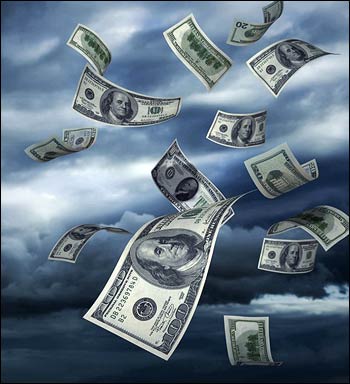
MO’ MONEY, MO’ PROBLEMS
Every up and coming writer dreams of breaking in. But what then? Here’s how to keep from going broke as a successful writer.
Reprinted courtesy of Script magazine
By Jim Cirile
Ah, the life of the Hollywood screenwriter – fame! Fortune! Okay, not so much fame. But still – fortune! Right? Heck, your spec script could sell for a million dollars. Unlikely, but it could happen. You could become a production polish guru netting $250,000/week. Unlikely, but it could happen. Or you could sell your script for WGA scale plus 10%, then melt down into a neurotic mess for the next ten months until the next check, any check, finally comes in.
Likely, but it could happen.
Welcome to the scintillating world of Mo’ Money, Mo’ Problems (with apologies to Notorious BIG.) We’re serving up the good, the bad and the ugly of how the whole money thing works for successful writers. We’re not even going to talk about being an up and comer, since as we all know, your writing income during that time is called “day job.” There’s no shame in that, and in fact it’s part of the deal, so suck it up -- and I said extra whipped cream in my Java Chip Frappucino, thanks. But once you finally do claw, scratch and furrow through the reinforced battlements surrounding Hollywood, it’s a good idea to have a clue what to expect.
THE PEOPLE WHO TAKE YOUR MONEY
Let’s say you sell your spec script for a cool $100,000. Nice, right? But how much of that do you actually pocket? The answer is $425.32. Okay, okay – kidding. But not as much as you may think. Tere are a lot of people with their hand out – agent, manager, attorney, WGA. And don’t forget least everyone’s favorite uncle (Sam) who desperately needs your money to keep blowing people up around the world. Here’s the breakdown:
Poof. Your six-figure payday is now the average salary of a llama groomer or a junior high janitor. The picture is exponentially worse if you have a writing partner. Each of you would net $22,601.25. And let’s not even discuss the 10% sales tax on anything you buy in Los Angeles. Oh, did I mention the $2,500 WGA West initiation fee (mandatory with any deal with a signatory)?
Uh... okay, that pretty much sucks. I know what you’re thinking – who needs all those hangers-on? Well, you do.
AGENT – It’s possible to get a deal without an agent, to be sure. They generally do next to nothing until you’re already established anyway, and then after you’ve done all the heavy lifting yourself, then they come aboard. You may be able to roll with just a manager and an attorney, especially if your manager is a former agent and has solid connex in town. But managers cannot legally negotiate for you, whereas agents can (or a manager/attorney combination could save you big bucks.) But when you’re starting out, the more people you have on your team, the better. Agents come with relationships, and those can be key not only to launching your career, but also introducing you to the town.
MANAGER – You don’t necessarily need both an agent and a manager. But what’s also true is that generally speaking, agents won’t give you the time of day, whereas managers will take your calls and help you develop your script until it’s good enough to land the agent who will then likely ignore you in the first place. If by some miracle you score an agent without a manager’s assistance, you’re either extremely lucky or your college roommate just happens to work at WME. But even in this scenario, you’re likely destined to be just a name on an 80-person list the agent can’t really bother with. Managers exist to provide that handholding and development most of us actually need but don’t think we do, to get us ready for prime-time as well as eventually get us the agent. So yeah, you don’t need to shell out that extra ten percent. Except you kind of do.
ATTORNEY – Five percent for an attorney? Trust me, that’s a deal. What can an attorney do for you that an agent can’t? A lot. They can build in bonuses and protections into your deal that agents sometimes miss or can’t be bothered with. If you get a piece of the merchandising of your film as well as box office performance bonuses, it’s because your attorney went to the mat for those. He is your “bad cop.” You certainly don’t want to be a d-y-c-k to the company who bought your project, and your agent may not want to ruffle too many feathers there either. But lawyers have no compunctions about ripping into the rapacious studio business affairs guys (whose job it is to screw you and delay payment in every possible way.) They act as your pit bull. You can certainly do a deal without an attorney, but you’ll likely get bent over most majestically.
So what's a working writer to do? Make as much money as possible while you can, obviously. The better the work you do, the more you’ll make. And if your quote is $250K and you’re getting two of three gigs a year, heck, even with everyone’s hand in your pocket, you’ll make out pretty well. So now the main thing is to try not to sabotage yourself, and to learn to financially cover your ass.
SUSTAINABILITY
Many of us are assume that once we’re in, we’re golden. Er, not so much. ICM agent Emile Gladstone says the average life of a screenwriter in the biz is about five years. There are factors both within and out of your control that conspire to railroad your career. First up: ego. Think you can keep your mouth shut when idiot producers make you rewrite your draft (uncompensated) for the 26th time? Can you suck it up and say, “Thank you, sir, may I have another?” Because it is exactly that ability that defines the successful writer with a long career. Seems obvious, right? But when you are in the thick of it and can’t take it anymore, you will rationalize a teeny little outburst. And in one fell swoop you could kill your career – no one wants to work with anyone perceived to be “difficult.”
And beware the trap so many writers fall into – not writing. We harangue our reps to keep shopping material the entire town has already passed on. Many a career has been killed by writers simply failing to write.
Worst of all: heat. One day you are hot; the next, brrrr. And it can happen in no time flat. Maybe a movie you wrote comes out and tanks. Maybe the town simply gets bored with you. Or maybe you’ve worked on a couple of assignments but the execs didn’t love the results. Everyone talks, and word will spread, and before long, poof, the heat is off. And when you are cold, brother, you are Godzilla-frozen-in-a-glacier cold.
Sooner or later, the gravy train will derail. You need to have a strategy for how to handle that.
DIVERSIFICATION
Okay, you’ve banked a couple hundred grand and are working steadily. What you need to do now is grab the snazziest suite in the Bellagio to celebrate your success and cruise in there in your smokin’ new Bentley Arnage. Buy an expensive house in Pacific Palisades with a heated pool and hire a staff. Take your pals to expensive dinners... in France. Oh, my God, did any of you believe any of that? Surest way to disaster. Many a writer has done exactly these things, only to wind up a one-bedroom in Van Nuys in short order.
So: diversify. Sure, we’re talking saving and investing, but that’s just part of it. Sock money away in the best interest-rate accounts you can find. Invest, but beware the volatile market – many of us lost good chunks of our life savings in the past few years. But also think about developing secondary and tertiary revenue streams. In other words, develop ways to make money immune to the vicissitudes of the movie business.
Maybe there’s an investment property you can buy – land, or perhaps an apartment building where the rents cover the mortgage every month and you make a little profit on top. Maybe you’re a closet cake boss. You could open a bakery and hire a manager to run it for you. Perhaps you can partner in your cousin Aloysius’s start-up electric dog polishing service. Because when your writing career gets cold, it’s nice to know Barky’s Wash & Wax will cover your rent! We all have interests other than writing – baseball, renaissance faires, study of ancient Latvian dentistry manuals. Find a way to monetize it. Putting all your eggs in the screenwriting basket is the surest way to eventually crush a marriage and land you in therapy (which you will not be able to afford.) Please consult with a trusted investment professional before investing in anything. We at Script magazine are not financial advisors and are not making specific recommendations.
IF ALL ELSE FAILS
So now you’ve seen that despite your best efforts, despite years of dedication to the craft, your exciting new career may end sooner than you thought. What to do when that happens? Go to ground and plot your comeback. Take the time. Maybe it’s six months. Maybe it’s two years. Your next salvo is going to be incredibly important. It could reinvigorate – or permanently sink – your career. And then, when you are absolutely certain that new piece of material is tight enough to bounce quarters off of, then contact your remaining industry pals and casually ask them if they’ll check out your new spec. The great thing about being a writer is that a sizzlin’ new spec can re-energize even the iciest career.
And remember, there are plenty of ways to be a writer. Consider TV, novels, childrens’ entertainment, plays, etc. Bang out a 5-page comedy sketch and put it up on YouTube or Funny or Die. Something you could generate in a weekend could wind up going viral. Same principle – shoot a short and take it on the festival circuit. Win a couple awards and suddenly it’s a whole new ballgame. Travel magazines are always looking for writers and pay damn well. Dash off some articles and submit ‘em. Write about that expensive dinner you flew your buddies to in France. And hey, there is no shame in falling back on that barista gig.
The good news is it has never been easier to jump-start a flagging career if you’re smart about it. Just make sure you’re realistic about what to expect from the movie business, and remember: downtown Culver City does need a pizza joint.
Thursday, August 11, 2011
THE FIVE MYTHS OF SCREENWRITING CONTESTS!
Now: listen to the podcast right here:
http://www.jeffreyborrowdale.c om/audio/5_Myths_of_Contests_2 011-08-11.mp3
++++Hi folks, want to know the skinny on screenplay contests?
Want to know which ones are the real deal?
Want to know which ones (if any) the industry pays attention to?
Want to know how to cut through the hordes and break into the top ten?
Well, check out our free conference call: THE FIVE MYTHS OF SCREENWRITING CONTESTS.
Join Coverage Ink and Writers on the Storm's Jim Cirile and Million Dollar Screenwriting and We Shoot the Winner's Chris Soth in a rollicking 1-hr free conference call, followed by a half-hour Q&A. Tips, wisdom and no-BS will be dispensed! Get the inside scoop on how contests are really run and whether or not any of them are really worth the money. Free gifts will be dispersed!
This is a completely free call, so register now at http://www.chrissoth.com. Then strap in for a fun and fast-paced ride with two industry vets, teaming up for the first time! Hurry - the call is coming up TODAY at 5:30 PM. Sign up now. Looking forward to sharing our knowledge and perspective with all of you.
Jim C.
Wednesday, August 10, 2011
Without a Box blast correction
Hi folks, just a clarification/correction: in our blast that went out from Without a Box last week regarding Writers on the Storm contest (which is extended to 8/21 via Without a Box ONLY,) it appeared that manager Jeffrey Belkin was affliated with Save the Cat! This was because a comma was somehow omitted in our list of participating judges and sponsoring companies. Just to be clear, Jeffrey Belkin is an awesome guy and a great manager but has no affiliation with the fine folks at Save the Cat! We regret the error.
And to be still clearer, you CAN still enter Writers on the Storm - until 8/21 and that is IT, folks -- but only via Without a Box. You can no longer enter through writerstorm.com or coverageink.com.
Jim C.
And to be still clearer, you CAN still enter Writers on the Storm - until 8/21 and that is IT, folks -- but only via Without a Box. You can no longer enter through writerstorm.com or coverageink.com.
Jim C.
Tuesday, August 09, 2011
HELP LIBERATOR! Deadline Wednesday 1PM!
For a very short time the past couple days, we here at Liberator Central were ecstatic. We were contacted by a donor who said he was going to step up with a $10,000 donation on our Kickstarter page. That person said he was stoked for the movie, excited to put us over the top and that he was going to make the pledge Friday. We were all giddy, of course, and I was all set to announce it, and then... (crickets chirp.)
Well, we haven't heard anything since then. No reply to our mails. Radio silence. Um... hello? If you're out there, oh most munificent one, well, we still love you, and we could really really use you! The clock, quite literally, is ticking. Now we know 10 grand is a lot of dough, so maybe you need time. Maybe this will still come through. But right now we kind of have a knot in our collective stomach the size of Lou Ferrigno's fist. We have to assume that this donor for whatever reason was not able to make good.
| Lou Ferrigno, Tara Cardinal and Don 'The Dragon' Wilson |
Gulp.
Two days to go, and we need over 8 grand.
Not sure what to say right now. To go from the highs of making this badass indie superhero movie with this amazing cast, to the lows of feeling like, well, the rug's been pulled out from under us... well, it's not a lot of fun.
Needless to say, if there's anything any of you can do -- retweet this message, Facebook it -- any way you can help us spread the word, heck, we might still make this goal. You can repost this awesomely cool article the kind folks at ScienceFiction.com wrote about us: http://sciencefiction.com/2011/08/06/liberator-a-dark-superhero-adventure-help-it-become-a-reality/. LIBERATOR already has thousands of fans on Twitter, Facebook and our web pages. We know there are Star Trek fans out there who would be psyched to see Mr. Worf back in action; La Femme Nikita fans excited to see the stunningly beautiful Peta Wilson return to the silver screen, and of course legions of Lou Ferrigno fans the world over. And seriously, Ed Asner as the President. Need I say more?
![]() |
| Jessica Jade Andres as Sonya Migliocetti |
Two days left. Doable. Please visit our Kickstarter page and contribute a buck or whatever you can: http://www.kickstarter.com/projects/1291858738/liberator-superhero-short-starring-lou-ferrigno
Thank you all, every one of you.
Jim Cirile
Executive Producer
WRITERS ON THE STORM WAB-ONLY EXTENSION
Hi folks,
There is still a way to enter Writers on the Storm. Though we are no longer accepting entries on our website (writerstorm.com,) and scripts submitted to Coverage Ink are no longer elgible for contest entry (or re-entry,) you CAN still submit via Without a Box.
The WAB-exclusive extension ends 8/21/11. There will be NO MORE extensions. So 8/21 is your last chance to submit your script to Writers on the Storm -- or for Coverage Ink clients, to submit your new, polish draft for reconsideration.
It's been a pleasure bringing Writers on the Storm back to you again this year. We had a few hiccups at first, but we switched to a new submission system and it's been smooth sailing since. We'll be back to you with more info as to current quarterfinalists (those folks who submitted through CI find out their status early) and how many entrants we've received so far as soon as we can get another newsletter together (we're terribly behind... deluge! Sorry!)
Click HERE to enter Writers on the Storm at Without a Box.
Ciao for now!
Jim C.
There is still a way to enter Writers on the Storm. Though we are no longer accepting entries on our website (writerstorm.com,) and scripts submitted to Coverage Ink are no longer elgible for contest entry (or re-entry,) you CAN still submit via Without a Box.The WAB-exclusive extension ends 8/21/11. There will be NO MORE extensions. So 8/21 is your last chance to submit your script to Writers on the Storm -- or for Coverage Ink clients, to submit your new, polish draft for reconsideration.
It's been a pleasure bringing Writers on the Storm back to you again this year. We had a few hiccups at first, but we switched to a new submission system and it's been smooth sailing since. We'll be back to you with more info as to current quarterfinalists (those folks who submitted through CI find out their status early) and how many entrants we've received so far as soon as we can get another newsletter together (we're terribly behind... deluge! Sorry!)
Click HERE to enter Writers on the Storm at Without a Box.
Ciao for now!
Jim C.
Thursday, July 28, 2011
Writers on the Storm Late Deadline Midnight 7/31
Hey folks,
Our late contest deadline is coming up Monday at midnight. Hurry -- bounce on over to http://writerstorm.com and get your scripts in if you haven't already. With a $10,000 cash grand prize and over $25K cash and prizes, 150 participating companies and two winners signed from last year -- it's the move.
OR... would you like to help us out AND get a discounted contest entry at the same time -- AND cool rewards?
We are currently in the middle of a huge fund-raising drive for finishing funds for our superhero pilot LIBERATOR on Kickstarter. So how does this sound:
Pledge $50 or more to LIBERATOR and your entry to Writers on the Storm is FREE.
Plus you'll receive an autographed DVD of the movie signed by Lou Ferrigno and more great rewards! See our Kickstarter page for the details.
Here's how to do it:
1) Visit our Kickstarter page
2) Pledge $50 or more.
3) Submit your script at writerstorm.com and pay the entry fee.
4) Email us at writerstorm@gmail.com and say, "I pledged $50 to Liberator."
We will promptly refund your contest entry fee in full! Hurry - deadline is midnight 7/31.
![]() |
| Contribute now or you will make Lou Ferrigno angry. |
OR... would you like to help us out AND get a discounted contest entry at the same time -- AND cool rewards?
We are currently in the middle of a huge fund-raising drive for finishing funds for our superhero pilot LIBERATOR on Kickstarter. So how does this sound:
Pledge $50 or more to LIBERATOR and your entry to Writers on the Storm is FREE.
Plus you'll receive an autographed DVD of the movie signed by Lou Ferrigno and more great rewards! See our Kickstarter page for the details.
Here's how to do it:
1) Visit our Kickstarter page
2) Pledge $50 or more.
3) Submit your script at writerstorm.com and pay the entry fee.
4) Email us at writerstorm@gmail.com and say, "I pledged $50 to Liberator."
We will promptly refund your contest entry fee in full! Hurry - deadline is midnight 7/31.
![]() | |||||
| Director Aaron Pope and Lou Ferrigno. Photo by Lucia Fasano. |
Saturday, July 16, 2011
Top 8 Financial Tips for Writers
Thinking of making some dough writing? (Not a bad idea, that.) Here are some tippers to help you hold on to that hard-earned cash. Sure, they may seem simple, intuitive, and a little “duh.” But our brains do have a tendency to turn off at the most inopportune times (like when making financial decisions.) Tape this list to your forehead!
1) Embrace Your Inner Skinflint. Just because your wallet’s fat, that doesn’t mean it’s time to live like Diddy. Screenwriting careers can be notoriously short-lived. At some point, the gravy train will derail. The high life is great for Miller beer, not you. Now is not the time to buy that mansion in Pacific Palisades. Stay cheap!
2) How Many Reps? If you have both an agent and a manager, God bless you. But each one of them Hoovers away 10%. Do you really need both? Maybe, if they’re both amazing and functioning as a team. But what if your manager is doing all the work and your agent doesn’t do jack? A manager and an attorney (at 10% and 5% respectively) might be the move.
3) Pay Yourself First. It’s easy to forget to spirit away a chunk for yourself when you’re loaded down with debt. Instead: lop 10% off the top (or more if you can) whenever you get a check and tuck it in an IRA, a CD or whatever your favorite investment is. You may only be earning a percent or two, but the main thing is you’re slowly building wealth. Even if it’s only 20 bucks – do it.
4) Diversify and Conquer. Learn the basics of investing (or find a trusted financial advisor to handle that stuff) and then make like the big boys and have multiple types of investments. Maybe you’ll own some stocks, some mutual funds, shares in non-US companies, maybe even physical gold or silver. This will prevent you from taking too big a hit if any one market or sector, or the entire economy, tanks.
5) Build a Secondary (non-industry) Revenue Stream. There’s a reason every actor in town owns a restaurant. Consider investing in or starting a business that has nothing to do with the movies. Love baseball cards, crocheting, line dancing, cheese-making? Then start a business involving one of your other passions. If your career ever goes down in flames, you’ll be glad you did.
6) Get an Accountant Who Knows the Biz. Here in Los Angeles, there are quite a few terrific accountants who not only know their tax law but all about how it applies to writers. Your family accountant in Terre Haute just ain’t gonna cut it. Your accountant becomes your partner in many ways and may even prevent you from making bad financial decisions. Best of all, they generally work for a flat fee, and will often dispense advice at no additional charge.
7) Get an Income Property. Real estate may not be the surefire investment it once was, but mortgages right now are dirt-cheap. Consider buying an income property such as an apartment building. For example, in a 4-unit building, the rents should cover the monthly costs and make you a little profit on the top. You might even be able to live in one of the units!
8) Never Pay Retail or Sales Tax! Ah, the wonder of eBay, Craigslist, the Recycler, Amazon marketplace… Why drive to the local Target and pay top-dollar plus the usurious 9.75% Los Angeles sales tax? Order online and save a bundle. You’ll often be able to find the exact same item brand new for less, with either free or cheap shipping, or even better, slightly used at deep discount.
***
It’s all about being having financial foresight and being frugal. Remember that the industry does not care about you. You are chattel to be utilized and then discarded. So even though right now you might be on top of the world and rolling in six-figure paychecks, two years from now you could be desperate and unemployed. Many writers have found themselves burnt by the system, left stunned, despondent and broke! Don’t be one of them. Follow these tips and shore up your financial empire. Good luck!
--Jim C.
1) Embrace Your Inner Skinflint. Just because your wallet’s fat, that doesn’t mean it’s time to live like Diddy. Screenwriting careers can be notoriously short-lived. At some point, the gravy train will derail. The high life is great for Miller beer, not you. Now is not the time to buy that mansion in Pacific Palisades. Stay cheap!
2) How Many Reps? If you have both an agent and a manager, God bless you. But each one of them Hoovers away 10%. Do you really need both? Maybe, if they’re both amazing and functioning as a team. But what if your manager is doing all the work and your agent doesn’t do jack? A manager and an attorney (at 10% and 5% respectively) might be the move.
3) Pay Yourself First. It’s easy to forget to spirit away a chunk for yourself when you’re loaded down with debt. Instead: lop 10% off the top (or more if you can) whenever you get a check and tuck it in an IRA, a CD or whatever your favorite investment is. You may only be earning a percent or two, but the main thing is you’re slowly building wealth. Even if it’s only 20 bucks – do it.
4) Diversify and Conquer. Learn the basics of investing (or find a trusted financial advisor to handle that stuff) and then make like the big boys and have multiple types of investments. Maybe you’ll own some stocks, some mutual funds, shares in non-US companies, maybe even physical gold or silver. This will prevent you from taking too big a hit if any one market or sector, or the entire economy, tanks.
5) Build a Secondary (non-industry) Revenue Stream. There’s a reason every actor in town owns a restaurant. Consider investing in or starting a business that has nothing to do with the movies. Love baseball cards, crocheting, line dancing, cheese-making? Then start a business involving one of your other passions. If your career ever goes down in flames, you’ll be glad you did.
6) Get an Accountant Who Knows the Biz. Here in Los Angeles, there are quite a few terrific accountants who not only know their tax law but all about how it applies to writers. Your family accountant in Terre Haute just ain’t gonna cut it. Your accountant becomes your partner in many ways and may even prevent you from making bad financial decisions. Best of all, they generally work for a flat fee, and will often dispense advice at no additional charge.
7) Get an Income Property. Real estate may not be the surefire investment it once was, but mortgages right now are dirt-cheap. Consider buying an income property such as an apartment building. For example, in a 4-unit building, the rents should cover the monthly costs and make you a little profit on the top. You might even be able to live in one of the units!
8) Never Pay Retail or Sales Tax! Ah, the wonder of eBay, Craigslist, the Recycler, Amazon marketplace… Why drive to the local Target and pay top-dollar plus the usurious 9.75% Los Angeles sales tax? Order online and save a bundle. You’ll often be able to find the exact same item brand new for less, with either free or cheap shipping, or even better, slightly used at deep discount.
***
It’s all about being having financial foresight and being frugal. Remember that the industry does not care about you. You are chattel to be utilized and then discarded. So even though right now you might be on top of the world and rolling in six-figure paychecks, two years from now you could be desperate and unemployed. Many writers have found themselves burnt by the system, left stunned, despondent and broke! Don’t be one of them. Follow these tips and shore up your financial empire. Good luck!
--Jim C.
Tuesday, July 12, 2011
New Moviebytes article on Writers on the Storm
As we move into our final (late) entry period of Writers on the Storm, we're delighted that MovieBytes.com's Barri Evans published this "Inside the Contest" article about us. It was great to pass along to Barri our philosophy and what makes us different. Please forgive the somewhat long-winded answers!
Read the article on MovieBytes right here.
Monday, July 11, 2011
Coverage Ink/Writers on the Storm Newsletter 7-11-11
HURRY! WRITERS ON THE STORM DEADLINE MIDNIGHT 7/11/11!
enter online now at http://writerstorm.com
1. SUP? by Jim C.
2. Shorties
3. Jim's Screenwriting Tip o' the Month
4. (More) Test Your Screenwriting IQ by Steve Kaire
5. Rating the Pitch Fests by Jim Cirile
+++
Sup, kids!
We're rolling out a new, easier to read format here at the Coverage Ink/Writers on the Storm/Cyberspace Open blog. We came to the conclusion that we were packing our monthly newsletter with so much content that a lot of folks never made it all the way through. So we're now going for shorter stories more frequently -- like an actual blog! Can you believe it?And speaking of blogs, the sharp-eyed among you may notice that we have yet again changed our name. Why? Because to our horror, it was recently pointed out that our previous nom de blog, "Stormfront," is the name of the largest white supremecist group's site. Gulp. Obviously, this is not anything we want to be associated with. So the new name, and I think this one's gonna stick, is STORMBLOG. We Googled that name and found it mainly associated with only a few smaller, insane death and hate cults, so we're good to go.
In keeping with the better, stronger, faster approach of the new format, I'm going to throw out just a couple of fast, random snippets for you all to do what you will with.
- The kids on Glee Project are insanely talented. How the hell?
- The summer movies this year, from what I've seen so far, are pretty freaking underwhelming. (The word is the Hogwarts gang brings the goods, thankfully.) Cars 2, seriously? Didn't you already do the spy thing with The Incredibles, Pixar? (PS: Still love you guys.)
- I am more convinced than ever that DIY is the way to go. Screw waiting around for Hollywood to buy our scripts. That paradigm is moribund. Long live Kickstarter and alternative financing!
- I finally decided I liked the new Hollywood Reporter format just as my subscription ran out.
- I still do not get Twitter. It just seems like dumbed-down facebook to me (which itself was just homogenized MySpace.)
- Michael Dorn (Worf from Star Trek) uses a 5-year-old flip phone. Seriously. Nicest dude in the world, by the way.
- Screenplay formula is a necessary evil. Eschew it at your own peril.
- There's nothing quite like performing Monty Python's "Travel Agent" sketch with your 11-year-old daughter reciting the Eric Idle rant word for word. Just like I did when I was 11. Watney's Red Barrel, anyone?
- I am really sick of shrinking sizes. A "pint" of Haagen Dazs is now down to 14 oz, and the 7-Eleven Big Gulp is now a Moderately Freakin' Puny Gulp at 30 oz, down from a full quart. Not cool!
- Oh wait -- Twitter is exactly the place for dumb random thoughts like these! Hmm...
Oh yeah, and we have a DEADLINE - Writers on the Storm Regular deadline is midnight Monday 7/11/11. Enter now right here.
Keep the faith, keep writing, and remmember -- it's always darkest when you first get the notes. Fight your way through. Get your mojo back. Use those !!^#%$@*! notes to empower you, not to defeat you.
Jim C.
Coverage Ink
Writers on the Storm
Like us on facebook!
+++
DEADLINE! Now is the time for all great writers to step on up. Writers on the Storm Screenplay Contest deadline is midnight, Monday 7/11/11. With over $25,000 cash and prizes, a heavy development prize package, and 150 companies, WOTS could be the defibrillator your career needs. Now featuring brand-new prizes from Virtual Pitch Fest and Million Dollar Screenwriting's Chris Soth. Did we mention we got two of our winners signed last year? Hurry, enter now! http://writerstorm.com.
WRITERS ON THE STORM QUARTERFINALISTS (SO FAR.) Wait. the contest hasn't even ended -- so how can we have quarterfinalists already? 'Cause anyone who submits their script to Coverage Ink for analysis before the final contest end date is automatically entered in Writers on the Storm for free. Score a 'consider with reservations' or better for script (roughly top 10%,) and you are an automatic quarterfinalist. Those folks then get the option of polishing and resubmitting before the end date, if they so desire. (And no, we show no favoritism to Coverage Ink submissions versus regular contest entries.)
So, a shout out to our current Writers on the Storm 2011 quarterfinalists to date:
- Getaway, Inc by Andy Maycock
- Sliding Into Home by Rich Sheehy
- Khamseen by AJ Ashby
- Flipping the Bird by Robert Hestand
- Just Being Jack by Judith Dunn
- O Golden Boy by John Bain
- Requited by Bill Johnston
AGENT'S HOT SHEET - LIVE! COMING TO SCREENWRITING EXPO. If you read Jim's column in Creative Screenwriting, you know that every issue he interviews some of the top agents and managers around and delivers the skinny on what's going on in the biz as it pertains to writers. Join us as we assemble an all-star panel of motion picture lit representatives and grills them on how the hell any of can ever get their attention. register online at screenwritingexpo.com.
RAFFLE WINNERS + NEW RAFFLE - LAST CHANCE. We've been giving away two free contest entries into Writers on the Storm every month since launch. So congrats to our two winners for June: Benjamin Peary and Rachel Lavin. We've already contacted them both with instructions on how to submit their scripts. Now it's your turn. Our last two giveaways are upon us. Send an email before July 31 to info@coverageink.com and put "STORM RAFFLE" in the subject line and your contact info in the mail. We'll randomly select the last two winners at the end of the month. Feel free to resubmit if you entered last month and didn't win!
THE LIBERATION HAS BEGUN. Coverage Ink proudly announces the completion of principal photography of its new short film LIBERATOR. "Liberator" stars Lou Ferrigno as a disgraced, washed-up ex-superhero whose secret black ops past comes back to haunt him as he tries to put his crumbling life back together.
"Liberator" also features a killer genre cast:
PETA WILSON (“La Femme Nikita”) as Marla Criswell
MICHAEL DORN (“Star Trek: The Next Generation”) as General Pollard
DON “THE DRAGON” WILSON as Sidewinder
and EDWARD ASNER as President Whitlock
“Every one of our lead cast have starred in a hit TV show or movies,” says Executive Producer/Co-writer Jim Cirile. “Launching a brand-new superhero property without source material is death. That’s why it was crucial that we cast an actual superhero – Lou Ferrigno – in the title role, and also why we surrounded him with the best actors we could find. We want to see the continuing adventures of this character.”
![]() |
| You won't like him when he's angry. |
Further grounding “Liberator” in comics mythology, former Marvel Comics bullpen artist Darren Auck is creating the film’s comic art prologue, and SyFy Channel’s “Hollywood Treasure” co-host Jesse D’Angelo designed the Liberator suit and poster art.
The film also features an original orchestral score by Tim Wynn, perhaps best known for scoring “Red Faction: Guerrilla.”
Become a part of Team Liberator! Visit our Kickstarter page to watch clips from the movie and find out how you can help us finish the film and blow everyone away.
FREE TELECONFERENCE WITH CHRIS SOTH and JIM CIRILE. Million Dollar Screenwriting's Chris Soth and Coverage Ink's Jim Cirile are teaming up to bring you a free teleseminar called FIVE MYTHS ABOUT SCREENWRITING CONTESTS. The seminar will run about 60 minutes and there will be a Q&A afterwards. And did we mention it's free? Mark your calendars: this is going down Thursday, 7/28. And if you've never seen Chris' "SOLD--How I Set Up Three Pitches in Hollywood" DVD, you need to check it out. This guy is a pitch master, and watching him confidently deliver his pitches and explain his prep and story breakdown is a marvel to behold. Register now at ChrisSoth.com.
+++
LARGE... BUT NOT IN CHARGE. “LARGE” is the world’s laziest and most meaningless adjective. We all overuse it without even thinking about it. Well, think about it. “Large” usually tells us nothing that we couldn’t have figured out on our own simply by mentioning the item described as “large.” More importantly, using “large” all the time tells people you are not scrutinizing your prose for the punchiest way to say things. Search and replace them out. If you do need to describe the size of something, compare it to something else. For example, instead of “a large cockroach,” which could mean anything from a 2-inch water bug to one 150-feet tall, say, “a cockroach the size of a VW bus.”
+++
(More) TEST YOUR SCREENWRITING IQ
by Steve Kaire
Here we go again with more q's to tickle your brain stem. A couple of these are gimmes, but a few of them may stump you. Good luck!
Projects that go into turnaround are often purchased by other studios and have a better chance of being produced.
That’s false. Turnaround projects have heavy costs that have accrued and which the new buyers have to pay before acquiring them. They have no better chance of getting produced.
Public domain properties never require the acquisition of rights from the original owner of the material.
That is true.
Residuals are checks sent to the writer for TV runs and DVD sales and are tracked by the Writers Guild.
That is true.
Dramas are well known for their “set pieces.”
That’s false. Action movies are famous for their “set pieces” which are big action scenes or sequences.
An attachment is either a star or director who’s interested in doing a particular project that makes it easier to set up and produce.
True.
The first five pages of a screenplay should be devoted to giving exposition and the character’s back story.
That’s false. The back story should be layered in gradually throughout your screenplay.
Your logline should tell what’s happening in your story almost like an unfolding of your scenes in order.
That is false. Tell what your story is about, not what happens in your story.
The bible of the entertainment industry is the Hollywood Creative Directory.
That is true. Although imdb pro is gaining ground.
Dialogue should be overwritten in order to give the actors more than they need and be able to discard what they decide not to use.
That’s false. Dialogue should be minimalistic.
You should always memorize your pitch.
That is false. If you memorize it and forget a few words, the pitch may not sound right and you’ll have to start again. Your pitch should sound like“practiced spontaneity.”
***
How did you all do? If you got every one right, then pat yourseklf on the back and go get 'em, tiger. If you knew several, then way to go -- you are a savvy student of the business. Keep up the good work, and I'll see you all back here in 30.
Steve Kaire (HighConceptScreenwriting.com) is a Screenwriter/Pitchman who’s sold 8 projects to the major studios without representation. His top-rated CD, “High Concept--How to Create, Pitch and Sell to Hollywood” is available on his website along with original articles and national screenwriting contests.
+++
Reprinted Courtesy of Script Magazine. Please note: this article refers to pitch festivals attended in 2010. We'll be running an update based on this year's round of pitch fests in an upcoming blog post.
by Jim Cirile
Let’s face it, pitch fests are nerve-wracking. You have five short minutes to try to impress someone who might be jaded, bored or hypercritical. And yet every year, thousands of screenwriters shell out big bucks to do just that, because there’s no better way to get in an executive’s face than to, well, get in an executive’s face.
But which to choose? As of this writing, there are four major players. Each has plusses and minuses, but they all have two things in common: they each offer direct access to industry you can’t get any other way, and they ain’t cheap. So come with us now as we investigate which, if any, of these pitch fests deserve your hard-earned shekels.
HOLLYWOOD PITCH FESTIVAL (Fade In)
www.fadeinonline.com/events/hollywood_pitchfest
Description: 2-day event
Cost: $445
July 30th + 31st, 2011
Now in their 15th year, Fade In magazine’s Hollywood Pitch Festival boasts an impressive list of connections made and projects set up. “(It) was just an idea I had in 1995 to give aspiring writers direct access to Hollywood buyers,” says Fade In’s Audrey Kelly. “We weren’t sure if it was going to work at the time, but we were happily surprised by the enthusiasm on both sides of the table -- attendees and industry pros alike. And then when we saw that it actually worked (we had two sales in the first year right off the bat) we were thrilled.”
Hollywood Pitch attendees select their meetings on day one on a first come, first served basis. “If you really want a choice of companies and time slots, you've got to show up early -- and we're talking REAL early,” says attendee Lee Tidball. “For (writing partner) Ron and I, it was always between 5 and 5:30 AM, and that usually put us in the first 30 or so. Good enough to get most of what we wanted. First in line people would get there an hour earlier (ugh). That, by the way, is for an 8 AM check-in.”
There’s also a standby line, which folks can wait in between scheduled meetings, but like Forrest Gump’s box of chocolates, you never know what you’re gonna get. “You wait… and wait… and wait… then you’re hustled into a meeting with some company that you never heard of, or you wind up pitching your horror/thriller to someone from Hallmark Channel,” laughs Tidball.
2010 attendee Bill Lange from San Diego calls Hollywood Pitch Fest a valuable experience and something that serious writers ought to do at least once. “As first-time attendees, my writing partner and I were lobbing screwballs at batters who were looking for fastballs in the strike zone. Even so, we did get a couple of requests from respectable production companies and we're still working the leads we got with our most recent script.”
GREAT AMERICAN PITCHFESTwww.pitchfest.com
Description: 2-day event (pitching on day 2 only.) Day one is free seminars.
Cost: Packages from $250 to $650
June 4th and 5th, 2011
By the numbers, Great American Pitchfest is our highest rated pitch event (see sidebar.) GAPF offers access to a large amount of companies in a single day -- meeting with 15 to 20 (or more) producers is possible. But where GAPF really distinguish themselves is on day one of their two-day event -- a full slate of free seminars from top screenwriting educators. GAPF says they get over 1,500 screenwriters piling into the Burbank Marriott’s ballrooms on day one (and approximately 500 attendees and 100-plus companies on day two.)
How’s the pitch event itself? Well-run and organized. Whatever company you want to meet with, you simply get on that line and wait your turn. If there are four people on line in front of you, that’s a 20-minute wait. “You spend a lot more time waiting in line than you do actually at the tables,” says writer/director Aaron Pope, who pitched at GAP in 2010. “You pitch, you come out and you have to queue back up. You’re able to hit a lot less tables than you think.” He says it’s important to target specifically the lines worth staying in. “I was there for four hours and met with a total of 10 or 12 companies. If I had been pitching a smaller project, I could have found lines that were shorter and hit a lot more.”

GAPF cofounder Bob Schultz says, “Some people are focused like a laser beam on exactly who they want. Other people’s strategy is to pitch to as many people as possible. So the different approaches (people take) help our lines stay more even-keeled.” Fellow cofounder Signe Olynyk adds, “For every five participants who attend, we invite another company. The lines rarely get longer than five people on average. And for those companies that we expect to be more popular, we try to get more than one representative from the company. That right away cuts the lines in half.”
As the Great American Pitchfest rolls into year eight, they claim tons of relationships made and projects set up. “We’ve had lots of people sign with agents or managers,” says Olynyk. “We’re over 100 success stories now. Every year we get at least ten more.”
GOLDEN PITCH FESTIVAL (Screenwriting Expo)
www.screenwritingexpo.com/golden-pitch.html
Description: 3-day event
Cost: $89 Expo sign-up fee plus $25/meeting or 5/$100
September 15-18, 2011
The Golden Pitch Festival takes place every year at the Screenwriting Expo, the largest annual screenwriting gathering. Golden Pitch uses an online shopping cart system for writers to select their appointments. This thankfully eliminates long lines (and getting up at 5 AM,) but it’s imperfect. While attempting to book my meetings this year, my choices wound up frequently disappearing from my shopping cart -- bought out from under me by others, since the tickets go quickly when registration opens. I finally managed to land meetings with the companies I wanted, all clumped together late Sunday afternoon within a few minutes of each other. But Golden Pitch should consider implementing a system like Ticketmaster uses if possible, where the choices stay in the shopping cart for five minutes, to prevent the frustration of having your selections disappearing and having to go back and do it all again.
Golden Pitch’s pricing policy is interesting. In theory you can pay $300 and select 15 companies to meet with, which is a pretty decent deal. But in my case, there were only three prodcos my partner and I wanted to meet with when the first wave of companies were announced. But later, after we’d spent our $75 and bought our three meetings, additional top-shelf companies were announced. Had we known this in advance, we certainly would have selected the five for $100 deal. But the discount only applies at the time of purchase, another policy Golden Pitch needs to rethink if they’re going to dribble out the attendees. Fortunately, there was a multitude of discount tickets (many half-price or less) available at the event for quite a few smaller companies.
But when the rubber hits the road, Golden Pitch shines. The organization, as well as selection of companies attending, were all excellent. Our 3:15 appointment took place right on time, as did our 4:30 and our 4:50. There was NO waiting in line. My partner and I were in and out of there in under two hours having met with the exact top-notch companies we’d wanted, leaving the rest of the day free to check out Expo events and NOT stand in line. Too, Golden Pitch staffers were knowledgeable, professional and helpful. Hat’s off to the management for the smooth as glass operation.
PITCH SUMMIT (InkTip)www.inktippitchsummit.com
Description: 2-day event (pitching on day two only.) Day one is seminars.
Cost: Packages from $300 to $625
July 23 and 24, 2011
InkTip founder Jerrol LeBaron had a bold vision for making his new Pitch Summit the must-attend pitch fest of the year by offering meetings with 30 or more companies in a single day. How? “We’ve made our pitch day a little bit longer, but at the same time, we’ve greatly reduced the ratio,” says LeBaron. “For example, instead of there being ten writers for every production company, we’re bringing almost 200 production companies and we expect about 400 writers.” However, LeBaron omitted one tiny detail. The real way InkTip accomplished that goal – and accomplish it they did – is by putting reps from three different companies at every table.
When my partner and I got wind of this, we were pissed. We now had to contend with keeping three people interested instead of one. Fortunately, InkTip mated the companies well, so for example, there would be three horror producers at the same table, etc. But still, withholding this key bit of information from attendees before the event frankly kind of sucks. But here’s the thing -- they shouldn’t have, because it’s brilliant. As my partner and I worked the room, in every case it worked in our favor. Enthusiasm is contagious, and we and I walked out of there with an astonishing 100% success rate.
As far as organization goes, the picture could have been better. Like Great American Pitchfest, you queue in lines, in this case for each table. The event got started late, then broke a scant 50 minutes in for water breaks (?) even though there was plenty of water for the execs in the room. Less than an hour after that, they broke yet again for lunch -- for another hour. Ugh. And while there were a lot of great companies, there were plenty of no-shows. My partner and I said “Later for this” and split before lunch. But those who stuck it out said it was worth all the waiting in line; many folks got lots of script requests. “We’re working out a lot of kinks, to be honest,” said InkTip’s Eric Kim. “The biggest lesson is to be sure in confirming a good number of producers so that we can most effectively organize them in the sense of what they’re looking for. There were a lot of last-minute show-ups.”
CONCLUSION
Which should you choose? Hate to do this to you guys, but we say: all of them. Cop out? Look, every single one of these gives you access that’s pretty much priceless. Each has downsides, but upsides which far outweigh them: the chance to meet a heck of a lot of people and possibly get a foot in the door in Hollywood. So it’s going to come down to budget and schedule – whatever works for you.
And please make sure your stuff kicks tush before signing up. There’s little point in shelling out hundreds of dollars to pitch them a script that’s a “pass.” Take the time and do the work. Access ain’t worth jack if you don’t have the goods. Good luck, and I’ll see you all at the next pitch event!
++
Screenwriter Jim Cirile lives in Los Angeles and is the owner of screenplay analysis/development service www.coverageink.com.
Read the companion article "BEST OF THE REST" at scriptmag.com.
+++
Thanks for reading! Questions? Comments? Shoot us an e-mail at info@coverageink.com.
You have received this mail because you are either a Coverage, Ink client, a Writers on the Storm contestant or you have participated in the Cyberspace Open Writing Tournament. We do not wish to spam anybody! This newsletter is the ONLY thing you will ever get from us -- and we will never sell your name to a list.
If you have received this e-mail in error, or do not wish to receive e-mails from us, please REPLY to this mail and enter DELETE in the subject line -- and we’ll make sure you’re removed immediately.
All content is copyright 2011 by Coverage, Ink.
Rating the Pitchfests
Reprinted Courtesy of Script Magazine. Please note: this article refers to pitch festivals attended in 2010. We'll be running an update based on this year's round of pitch fests in an upcoming blog post.
by Jim Cirile
Let’s face it, pitch fests are nerve-wracking. You have five short minutes to try to impress someone who might be jaded, bored or hypercritical. And yet every year, thousands of screenwriters shell out big bucks to do just that, because there’s no better way to get in an executive’s face than to, well, get in an executive’s face.
But which to choose? As of this writing, there are four major players. Each has plusses and minuses, but they all have two things in common: they each offer direct access to industry you can’t get any other way, and they ain’t cheap. So come with us now as we investigate which, if any, of these pitch fests deserve your hard-earned shekels.
HOLLYWOOD PITCH FESTIVAL (Fade In)
www.fadeinonline.com/events/hollywood_pitchfest
Description: 2-day event
Cost: $445
July 30th + 31st, 2011
Now in their 15th year, Fade In magazine’s Hollywood Pitch Festival boasts an impressive list of connections made and projects set up. “(It) was just an idea I had in 1995 to give aspiring writers direct access to Hollywood buyers,” says Fade In’s Audrey Kelly. “We weren’t sure if it was going to work at the time, but we were happily surprised by the enthusiasm on both sides of the table -- attendees and industry pros alike. And then when we saw that it actually worked (we had two sales in the first year right off the bat) we were thrilled.”
Hollywood Pitch attendees select their meetings on day one on a first come, first served basis. “If you really want a choice of companies and time slots, you've got to show up early -- and we're talking REAL early,” says attendee Lee Tidball. “For (writing partner) Ron and I, it was always between 5 and 5:30 AM, and that usually put us in the first 30 or so. Good enough to get most of what we wanted. First in line people would get there an hour earlier (ugh). That, by the way, is for an 8 AM check-in.”
There’s also a standby line, which folks can wait in between scheduled meetings, but like Forrest Gump’s box of chocolates, you never know what you’re gonna get. “You wait… and wait… and wait… then you’re hustled into a meeting with some company that you never heard of, or you wind up pitching your horror/thriller to someone from Hallmark Channel,” laughs Tidball.
2010 attendee Bill Lange from San Diego calls Hollywood Pitch Fest a valuable experience and something that serious writers ought to do at least once. “As first-time attendees, my writing partner and I were lobbing screwballs at batters who were looking for fastballs in the strike zone. Even so, we did get a couple of requests from respectable production companies and we're still working the leads we got with our most recent script.”
GREAT AMERICAN PITCHFEST
www.pitchfest.com
Description: 2-day event (pitching on day 2 only.) Day one is free seminars.
Cost: Packages from $250 to $650
June 4th + 5th, 2011
By the numbers, Great American Pitchfest is our highest rated pitch event (see sidebar.) GAPF offers access to a large amount of companies in a single day -- meeting with 15 to 20 (or more) producers is possible. But where GAPF really distinguish themselves is on day one of their two-day event -- a full slate of free seminars from top screenwriting educators. GAPF says they get over 1,500 screenwriters piling into the Burbank Marriott’s ballrooms on day one (and approximately 500 attendees and 100-plus companies on day two.)
How’s the pitch event itself? Well-run and organized. Whatever company you want to meet with, you simply get on that line and wait your turn. If there are four people on line in front of you, that’s a 20-minute wait. “You spend a lot more time waiting in line than you do actually at the tables,” says writer/director Aaron Pope, who pitched at GAP in 2010. “You pitch, you come out and you have to queue back up. You’re able to hit a lot less tables than you think.” He says it’s important to target specifically the lines worth staying in. “I was there for four hours and met with a total of 10 or 12 companies. If I had been pitching a smaller project, I could have found lines that were shorter and hit a lot more.”
GAPF cofounder Bob Schultz says, “Some people are focused like a laser beam on exactly who they want. Other people’s strategy is to pitch to as many people as possible. So the different approaches (people take) help our lines stay more even-keeled.” Fellow cofounder Signe Olynyk adds, “For every five participants who attend, we invite another company. The lines rarely get longer than five people on average. And for those companies that we expect to be more popular, we try to get more than one representative from the company. That right away cuts the lines in half.”
As the Great American Pitchfest rolls into year eight, they claim tons of relationships made and projects set up. “We’ve had lots of people sign with agents or managers,” says Olynyk. “We’re over 100 success stories now. Every year we get at least ten more.”
GOLDEN PITCH FESTIVAL (Screenwriting Expo)
www.screenwritingexpo.com/golden-pitch.html
Description: 3-day event
Cost: $89 Expo sign-up fee plus $25/meeting or 5/$100
September 15-18, 2011
The Golden Pitch Festival takes place every year at the Screenwriting Expo, the largest annual screenwriting gathering. Golden Pitch uses an online shopping cart system for writers to select their appointments. This thankfully eliminates long lines (and getting up at 5 AM,) but it’s imperfect. While attempting to book my meetings this year, my choices wound up frequently disappearing from my shopping cart -- bought out from under me by others, since the tickets go quickly when registration opens. I finally managed to land meetings with the companies I wanted, all clumped together late Sunday afternoon within a few minutes of each other. But Golden Pitch should consider implementing a system like Ticketmaster uses if possible, where the choices stay in the shopping cart for five minutes, to prevent the frustration of having your selections disappearing and having to go back and do it all again.
Golden Pitch’s pricing policy is interesting. In theory you can pay $300 and select 15 companies to meet with, which is a pretty decent deal. But in my case, there were only three prodcos my partner and I wanted to meet with when the first wave of companies were announced. But later, after we’d spent our $75 and bought our three meetings, additional top-shelf companies were announced. Had we known this in advance, we certainly would have selected the five for $100 deal. But the discount only applies at the time of purchase, another policy Golden Pitch needs to rethink if they’re going to dribble out the attendees. Fortunately, there was a multitude of discount tickets (many half-price or less) available at the event for quite a few smaller companies.
But when the rubber hits the road, Golden Pitch shines. The organization, as well as selection of companies attending, were all excellent. Our 3:15 appointment took place right on time, as did our 4:30 and our 4:50. There was NO waiting in line. My partner and I were in and out of there in under two hours having met with the exact top-notch companies we’d wanted, leaving the rest of the day free to check out Expo events and NOT stand in line. Too, Golden Pitch staffers were knowledgeable, professional and helpful. Hat’s off to the management for the smooth as glass operation.
PITCH SUMMIT (InkTip)
www.inktippitchsummit.com
Description: 2-day event (pitching on day two only.) Day one is seminars.
Cost: Packages from $300 to $625
July 23 - 24, 2011
InkTip founder Jerrol LeBaron had a bold vision for making his new Pitch Summit the must-attend pitch fest of the year by offering meetings with 30 or more companies in a single day. How? “We’ve made our pitch day a little bit longer, but at the same time, we’ve greatly reduced the ratio,” says LeBaron. “For example, instead of there being ten writers for every production company, we’re bringing almost 200 production companies and we expect about 400 writers.” However, LeBaron omitted one tiny detail. The real way InkTip accomplished that goal – and accomplish it they did – is by putting reps from three different companies at every table.
When my partner and I got wind of this, we were pissed. We now had to contend with keeping three people interested instead of one. Fortunately, InkTip mated the companies well, so for example, there would be three horror producers at the same table, etc. But still, withholding this key bit of information from attendees before the event frankly kind of sucks. But here’s the thing -- they shouldn’t have, because it’s brilliant. As my partner and I worked the room, in every case it worked in our favor. Enthusiasm is contagious, and we and I walked out of there with an astonishing 100% success rate.
As far as organization goes, the picture could have been better. Like Great American Pitchfest, you queue in lines, in this case for each table. The event got started late, then broke a scant 50 minutes in for water breaks (?) even though there was plenty of water for the execs in the room. Less than an hour after that, they broke yet again for lunch -- for another hour. Ugh. And while there were a lot of great companies, there were plenty of no-shows. My partner and I said “Later for this” and split before lunch. But those who stuck it out said it was worth all the waiting in line; many folks got lots of script requests. “We’re working out a lot of kinks, to be honest,” said InkTip’s Eric Kim. “The biggest lesson is to be sure in confirming a good number of producers so that we can most effectively organize them in the sense of what they’re looking for. There were a lot of last-minute show-ups.”
CONCLUSION
Which should you choose? Hate to do this to you guys, but we say: all of them. Cop out? Look, every single one of these gives you access that’s pretty much priceless. Each has downsides, but upsides which far outweigh them: the chance to meet a heck of a lot of people and possibly get a foot in the door in Hollywood. So it’s going to come down to budget and schedule – whatever works for you.
And please make sure your stuff kicks tush before signing up. There’s little point in shelling out hundreds of dollars to pitch them a script that’s a “pass.” Take the time and do the work. Access ain’t worth jack if you don’t have the goods. Good luck, and I’ll see you all at the next pitch event!
++
Screenwriter Jim Cirile lives in Los Angeles and is the owner of screenplay analysis/development service www.coverageink.com.
Read the companion article "BEST OF THE REST" at scriptmag.com.
by Jim Cirile
Let’s face it, pitch fests are nerve-wracking. You have five short minutes to try to impress someone who might be jaded, bored or hypercritical. And yet every year, thousands of screenwriters shell out big bucks to do just that, because there’s no better way to get in an executive’s face than to, well, get in an executive’s face.
But which to choose? As of this writing, there are four major players. Each has plusses and minuses, but they all have two things in common: they each offer direct access to industry you can’t get any other way, and they ain’t cheap. So come with us now as we investigate which, if any, of these pitch fests deserve your hard-earned shekels.
HOLLYWOOD PITCH FESTIVAL (Fade In)
www.fadeinonline.com/events/hollywood_pitchfest
Description: 2-day event
Cost: $445
July 30th + 31st, 2011
Now in their 15th year, Fade In magazine’s Hollywood Pitch Festival boasts an impressive list of connections made and projects set up. “(It) was just an idea I had in 1995 to give aspiring writers direct access to Hollywood buyers,” says Fade In’s Audrey Kelly. “We weren’t sure if it was going to work at the time, but we were happily surprised by the enthusiasm on both sides of the table -- attendees and industry pros alike. And then when we saw that it actually worked (we had two sales in the first year right off the bat) we were thrilled.”
Hollywood Pitch attendees select their meetings on day one on a first come, first served basis. “If you really want a choice of companies and time slots, you've got to show up early -- and we're talking REAL early,” says attendee Lee Tidball. “For (writing partner) Ron and I, it was always between 5 and 5:30 AM, and that usually put us in the first 30 or so. Good enough to get most of what we wanted. First in line people would get there an hour earlier (ugh). That, by the way, is for an 8 AM check-in.”
There’s also a standby line, which folks can wait in between scheduled meetings, but like Forrest Gump’s box of chocolates, you never know what you’re gonna get. “You wait… and wait… and wait… then you’re hustled into a meeting with some company that you never heard of, or you wind up pitching your horror/thriller to someone from Hallmark Channel,” laughs Tidball.
2010 attendee Bill Lange from San Diego calls Hollywood Pitch Fest a valuable experience and something that serious writers ought to do at least once. “As first-time attendees, my writing partner and I were lobbing screwballs at batters who were looking for fastballs in the strike zone. Even so, we did get a couple of requests from respectable production companies and we're still working the leads we got with our most recent script.”
GREAT AMERICAN PITCHFESTwww.pitchfest.com
Description: 2-day event (pitching on day 2 only.) Day one is free seminars.
Cost: Packages from $250 to $650
June 4th + 5th, 2011
By the numbers, Great American Pitchfest is our highest rated pitch event (see sidebar.) GAPF offers access to a large amount of companies in a single day -- meeting with 15 to 20 (or more) producers is possible. But where GAPF really distinguish themselves is on day one of their two-day event -- a full slate of free seminars from top screenwriting educators. GAPF says they get over 1,500 screenwriters piling into the Burbank Marriott’s ballrooms on day one (and approximately 500 attendees and 100-plus companies on day two.)
How’s the pitch event itself? Well-run and organized. Whatever company you want to meet with, you simply get on that line and wait your turn. If there are four people on line in front of you, that’s a 20-minute wait. “You spend a lot more time waiting in line than you do actually at the tables,” says writer/director Aaron Pope, who pitched at GAP in 2010. “You pitch, you come out and you have to queue back up. You’re able to hit a lot less tables than you think.” He says it’s important to target specifically the lines worth staying in. “I was there for four hours and met with a total of 10 or 12 companies. If I had been pitching a smaller project, I could have found lines that were shorter and hit a lot more.”

GAPF cofounder Bob Schultz says, “Some people are focused like a laser beam on exactly who they want. Other people’s strategy is to pitch to as many people as possible. So the different approaches (people take) help our lines stay more even-keeled.” Fellow cofounder Signe Olynyk adds, “For every five participants who attend, we invite another company. The lines rarely get longer than five people on average. And for those companies that we expect to be more popular, we try to get more than one representative from the company. That right away cuts the lines in half.”
As the Great American Pitchfest rolls into year eight, they claim tons of relationships made and projects set up. “We’ve had lots of people sign with agents or managers,” says Olynyk. “We’re over 100 success stories now. Every year we get at least ten more.”
GOLDEN PITCH FESTIVAL (Screenwriting Expo)
www.screenwritingexpo.com/golden-pitch.html
Description: 3-day event
Cost: $89 Expo sign-up fee plus $25/meeting or 5/$100
September 15-18, 2011
The Golden Pitch Festival takes place every year at the Screenwriting Expo, the largest annual screenwriting gathering. Golden Pitch uses an online shopping cart system for writers to select their appointments. This thankfully eliminates long lines (and getting up at 5 AM,) but it’s imperfect. While attempting to book my meetings this year, my choices wound up frequently disappearing from my shopping cart -- bought out from under me by others, since the tickets go quickly when registration opens. I finally managed to land meetings with the companies I wanted, all clumped together late Sunday afternoon within a few minutes of each other. But Golden Pitch should consider implementing a system like Ticketmaster uses if possible, where the choices stay in the shopping cart for five minutes, to prevent the frustration of having your selections disappearing and having to go back and do it all again.
Golden Pitch’s pricing policy is interesting. In theory you can pay $300 and select 15 companies to meet with, which is a pretty decent deal. But in my case, there were only three prodcos my partner and I wanted to meet with when the first wave of companies were announced. But later, after we’d spent our $75 and bought our three meetings, additional top-shelf companies were announced. Had we known this in advance, we certainly would have selected the five for $100 deal. But the discount only applies at the time of purchase, another policy Golden Pitch needs to rethink if they’re going to dribble out the attendees. Fortunately, there was a multitude of discount tickets (many half-price or less) available at the event for quite a few smaller companies.
But when the rubber hits the road, Golden Pitch shines. The organization, as well as selection of companies attending, were all excellent. Our 3:15 appointment took place right on time, as did our 4:30 and our 4:50. There was NO waiting in line. My partner and I were in and out of there in under two hours having met with the exact top-notch companies we’d wanted, leaving the rest of the day free to check out Expo events and NOT stand in line. Too, Golden Pitch staffers were knowledgeable, professional and helpful. Hat’s off to the management for the smooth as glass operation.
PITCH SUMMIT (InkTip)www.inktippitchsummit.com
Description: 2-day event (pitching on day two only.) Day one is seminars.
Cost: Packages from $300 to $625
July 23 - 24, 2011
InkTip founder Jerrol LeBaron had a bold vision for making his new Pitch Summit the must-attend pitch fest of the year by offering meetings with 30 or more companies in a single day. How? “We’ve made our pitch day a little bit longer, but at the same time, we’ve greatly reduced the ratio,” says LeBaron. “For example, instead of there being ten writers for every production company, we’re bringing almost 200 production companies and we expect about 400 writers.” However, LeBaron omitted one tiny detail. The real way InkTip accomplished that goal – and accomplish it they did – is by putting reps from three different companies at every table.
When my partner and I got wind of this, we were pissed. We now had to contend with keeping three people interested instead of one. Fortunately, InkTip mated the companies well, so for example, there would be three horror producers at the same table, etc. But still, withholding this key bit of information from attendees before the event frankly kind of sucks. But here’s the thing -- they shouldn’t have, because it’s brilliant. As my partner and I worked the room, in every case it worked in our favor. Enthusiasm is contagious, and we and I walked out of there with an astonishing 100% success rate.
As far as organization goes, the picture could have been better. Like Great American Pitchfest, you queue in lines, in this case for each table. The event got started late, then broke a scant 50 minutes in for water breaks (?) even though there was plenty of water for the execs in the room. Less than an hour after that, they broke yet again for lunch -- for another hour. Ugh. And while there were a lot of great companies, there were plenty of no-shows. My partner and I said “Later for this” and split before lunch. But those who stuck it out said it was worth all the waiting in line; many folks got lots of script requests. “We’re working out a lot of kinks, to be honest,” said InkTip’s Eric Kim. “The biggest lesson is to be sure in confirming a good number of producers so that we can most effectively organize them in the sense of what they’re looking for. There were a lot of last-minute show-ups.”
CONCLUSION
Which should you choose? Hate to do this to you guys, but we say: all of them. Cop out? Look, every single one of these gives you access that’s pretty much priceless. Each has downsides, but upsides which far outweigh them: the chance to meet a heck of a lot of people and possibly get a foot in the door in Hollywood. So it’s going to come down to budget and schedule – whatever works for you.
And please make sure your stuff kicks tush before signing up. There’s little point in shelling out hundreds of dollars to pitch them a script that’s a “pass.” Take the time and do the work. Access ain’t worth jack if you don’t have the goods. Good luck, and I’ll see you all at the next pitch event!
++
Screenwriter Jim Cirile lives in Los Angeles and is the owner of screenplay analysis/development service www.coverageink.com.
Read the companion article "BEST OF THE REST" at scriptmag.com.
(More) Test Your Screenwriting IQ by Steve Kaire
(More) TEST YOUR SCREENWRITING IQ
by Steve Kaire
Here we go again with more q's to tickle your brain stem. A couple of these are gimmes, but a few of them may stump you. Good luck!
Projects that go into turnaround are often purchased by other studios and have a better chance of being produced.
That’s false. Turnaround projects have heavy costs that have accrued and which the new buyers have to pay before acquiring them. They have no better chance of getting produced.
Public domain properties never require the acquisition of rights from the original owner of the material.
That is true.
Residuals are checks sent to the writer for TV runs and DVD sales and are tracked by the Writers Guild.
That is true.
Dramas are well known for their “set pieces.”
That’s false. Action movies are famous for their “set pieces” which are big action scenes or sequences.
An attachment is either a star or director who’s interested in doing a particular project that makes it easier to set up and produce.
True.
The first five pages of a screenplay should be devoted to giving exposition and the character’s back story.
That’s false. The back story should be layered in gradually throughout your screenplay.
Your logline should tell what’s happening in your story almost like an unfolding of your scenes in order.
That is false. Tell what your story is about, not what happens in your story.
The bible of the entertainment industry is the Hollywood Creative Directory.
That is true. Although imdb pro is gaining ground.
Dialogue should be overwritten in order to give the actors more than they need and be able to discard what they decide not to use.
That’s false. Dialogue should be minimalistic.
You should always memorize your pitch.
That is false. If you memorize it and forget a few words, the pitch may not sound right and you’ll have to start again. Your pitch should sound like“practiced spontaneity.”
***
How did you all do? If you got every one right, then pat yourseklf on the back and go get 'em, tiger. If you knew several, then way to go -- you are a savvy student of the business. Keep up the good work, and I'll see you all back here in 30.
Steve Kaire (HighConceptScreenwriting.com) is a Screenwriter/Pitchman who’s sold 8 projects to the major studios without representation. His top-rated CD, “High Concept--How to Create, Pitch and Sell to Hollywood” is available on his website along with original articles and national screenwriting contests.
by Steve Kaire
Here we go again with more q's to tickle your brain stem. A couple of these are gimmes, but a few of them may stump you. Good luck!
Projects that go into turnaround are often purchased by other studios and have a better chance of being produced.
That’s false. Turnaround projects have heavy costs that have accrued and which the new buyers have to pay before acquiring them. They have no better chance of getting produced.
Public domain properties never require the acquisition of rights from the original owner of the material.
That is true.
Residuals are checks sent to the writer for TV runs and DVD sales and are tracked by the Writers Guild.
That is true.
Dramas are well known for their “set pieces.”
That’s false. Action movies are famous for their “set pieces” which are big action scenes or sequences.
An attachment is either a star or director who’s interested in doing a particular project that makes it easier to set up and produce.
True.
The first five pages of a screenplay should be devoted to giving exposition and the character’s back story.
That’s false. The back story should be layered in gradually throughout your screenplay.
Your logline should tell what’s happening in your story almost like an unfolding of your scenes in order.
That is false. Tell what your story is about, not what happens in your story.
The bible of the entertainment industry is the Hollywood Creative Directory.
That is true. Although imdb pro is gaining ground.
Dialogue should be overwritten in order to give the actors more than they need and be able to discard what they decide not to use.
That’s false. Dialogue should be minimalistic.
You should always memorize your pitch.
That is false. If you memorize it and forget a few words, the pitch may not sound right and you’ll have to start again. Your pitch should sound like“practiced spontaneity.”
***
How did you all do? If you got every one right, then pat yourseklf on the back and go get 'em, tiger. If you knew several, then way to go -- you are a savvy student of the business. Keep up the good work, and I'll see you all back here in 30.
Steve Kaire (HighConceptScreenwriting.com) is a Screenwriter/Pitchman who’s sold 8 projects to the major studios without representation. His top-rated CD, “High Concept--How to Create, Pitch and Sell to Hollywood” is available on his website along with original articles and national screenwriting contests.
Jim's Tip o' the Month
LARGE... BUT NOT IN CHARGE. “LARGE” is the world’s laziest and most meaningless adjective. We all overuse it without even thinking about it. Well, think about it. “Large” usually tells us nothing that we couldn’t have figured out on our own simply by mentioning the item described as “large.” More importantly, using “large” all the time tells people you are not scrutinizing your prose for the punchiest way to say things. Search and replace them out. If you do need to describe the size of something, compare it to something else. For example, instead of “a large cockroach,” which could mean anything from a 2-inch water bug to one 150-feet tall, say, “a cockroach the size of a VW bus.”
Shorties 7-11
DEADLINE! Now is the time for all great writers to step on up. Writers on the Storm Screenplay Contest deadline is midnight, Monday 7/11/11. With over $25,000 cash and prizes, a heavy development prize package, and 150 companies, WOTS could be the defibrillator your career needs. Now featuring brand-new prizes from Virtual Pitch Fest and Million Dollar Screenwriting's Chris Soth. Did we mention we got two of our winners signed last year? Hurry, enter now! http://writerstorm.com.
WRITERS ON THE STORM QUARTERFINALISTS (SO FAR.) Wait. the contest hasn't even ended -- so how can we have quarterfinalists already? 'Cause anyone who submits their script to Coverage Ink for analysis before the final contest end date is automatically entered in Writers on the Storm for free. Score a 'consider with reservations' or better for script (roughly top 10%,) and you are an automatic quarterfinalist. Those folks then get the option of polishing and resubmitting before the end date, if they so desire. (And no, we show no favoritism to Coverage Ink submissions versus regular contest entries.)
So, a shout out to our current Writers on the Storm 2011 quarterfinalists to date:
- Getaway, Inc by Andy Maycock
- Sliding Into Home by Rich Sheehy
- Khamseen by AJ Ashby
- Flipping the Bird by Robert Hestand
- Just Being Jack by Judith Dunn
- O Golden Boy by John Bain
- Requited by Bill Johnston
AGENT'S HOT SHEET - LIVE! COMING TO SCREENWRITING EXPO. If you read Jim's column in Creative Screenwriting, you know that every issue he interviews some of the top agents and managers around and delivers the skinny on what's going on in the biz as it pertains to writers. Join us as we assemble an all-star panel of motion picture lit representatives and grills them on how the hell any of can ever get their attention. register online at screenwritingexpo.com.
RAFFLE WINNERS + NEW RAFFLE - LAST CHANCE. We've been giving away two free contest entries into Writers on the Storm every month since launch. So congrats to our two winners for June: Benjamin Peary and Rachel Lavin. We've already contacted them both with instructions on how to submit their scripts. Now it's your turn. Our last two giveaways are upon us. Send an email before July 31 to info@coverageink.com and put "STORM RAFFLE" in the subject line and your contact info in the mail. We'll randomly select the last two winners at the end of the month. Feel free to resubmit if you entered last month and didn't win!
THE LIBERATION HAS BEGUN. Coverage Ink proudly announces the completion of principal photography of its new short film LIBERATOR. "Liberator" stars Lou Ferrigno as a disgraced, washed-up ex-superhero whose secret black ops past comes back to haunt him as he tries to put his crumbling life back together.
"Liberator" also features a killer genre cast:
PETA WILSON (“La Femme Nikita”) as Marla Criswell
MICHAEL DORN (“Star Trek: The Next Generation”) as General Pollard
DON “THE DRAGON” WILSON as Sidewinder
and EDWARD ASNER as President Whitlock
“Every one of our lead cast have starred in a hit TV show or movies,” says Executive Producer/Co-writer Jim Cirile. “Launching a brand-new superhero property without source material is death. That’s why it was crucial that we cast an actual superhero – Lou Ferrigno – in the title role, and also why we surrounded him with the best actors we could find. We want to see the continuing adventures of this character.”
![]() |
| You won't like him when he's angry. |
Further grounding “Liberator” in comics mythology, former Marvel Comics bullpen artist Darren Auck is creating the film’s comic art prologue, and SyFy Channel’s “Hollywood Treasure” co-host Jesse D’Angelo designed the Liberator suit and poster art.
The film also features an original orchestral score by Tim Wynn, perhaps best known for scoring “Red Faction: Guerrilla.”
Become a part of Team Liberator! Visit our Kickstarter page to watch clips from the movie and find out how you can help us finish the film and blow everyone away.
FREE TELECONFERENCE WITH CHRIS SOTH and JIM CIRILE. Million Dollar Screenwriting's Chris Soth and Coverage Ink's Jim Cirile are teaming up to bring you a free teleseminar called FIVE MYTHS ABOUT SCREENWRITING CONTESTS. The seminar will run about 60 minutes and there will be a Q&A afterwards. And did we mention it's free? Mark your calendars: this is going down Thursday, 7/28. And if you've never seen Chris' "SOLD--How I Set Up Three Pitches in Hollywood" DVD, you need to check it out. This guy is a pitch master, and watching him confidently deliver his pitches and explain his prep and story breakdown is a marvel to behold. Register now at ChrisSoth.com.
Thursday, July 07, 2011
Writers on the Storm deadline 7/11/11
WRITERS ON THE STORM Screenplay Competition
***Deadline: midnight 7/11/11*** Enter now!
"Whoever says contests get you nowhere should be shot. You hooked me up with UTA!" -- Jeremy Shipp
150 companies. $10,000 first prize. Over $25,000 cash and prizes. Every entry receives feedback.
But what really counts is results. We got two of our winners from last year's contest signed. We placed Jeremy Shipp ("Sleight of Hand") with UTA, and Muraviov Management gobbled up Paul Moxham ("Vertically Challenged.") Hey, prize money is great, but what this is really about is your career. Read the interview with Jeremy Shipp right here: http://writerstorm.com/content/winners
But we don't skimp on the prizes either. Check this out:
Winner:
$10K cash
Coverage Ink Platinum Script Development Package
Creative Screenwriting Analyst Survey + subscription
Admission to Save the Cat! Beat Sheet weekend
Screenwriter Showcase 1-year subscription
Ellen Sandler 1/2 hr consultation
Michael Hauge Max Pack
Movie Outline 3.0 screenwriting software
Save the Cat! 3.0 software
Script Pipeline 1 yr database subscription
TrackingB.com - 1 year subscription
High Concept Screenwriting Audio CD by Steve Kaire
Neil Landau 10 Things I Learned in Film School
Moviemaker magazine 1 year subscription
Virtual Pitchfest - 10 pitch pack
Great American Pitchfest bronze pass + Screenwriters Survival Kit
inkTip: Script Listing, newsletter and magazine posting
Writers Boot Camp: $1,000 in Creative Currency + script analysis
Plus tons more prizes for 2nd and 3rd place, top 10, top 50 and everyone who enters. See writerstorm.com for complete details.
Hurry! Deadline approaching fast. Ener online NOW at http://writerstorm.com.
Good luck to all!
Subscribe to:
Posts (Atom)