Monday, June 30, 2014

GET REPPED - NOW! ***EXTENDED*** - MUST END 7/13

Ahoy, fellow scribes! We here at Coverage Ink have something mighty cool we're whipping out on ya.

***ALL SCRIPTS THAT RECEIVE A CONSIDER, SUBMITTED BETWEEN 6/30 and 7/13/14, WILL BE READ BY A TOP LIT MANAGER - GUARANTEED.***


Here's how it works. For a limited time only, two incredible literary representatives -- Jake Wagner from Benderspink and agent Chris Mills from Magnet Management -- have agreed that they will personally read any scripts submitted to Coverage Ink for script coverage that garner a "Consider" for script (roughly the top 5-10% of submissions on average.) Wagner will read the feature scripts and Mills will read the TV pilots.

So here's your chance, folks.  The door is open.  If you've got the goods, you've got a real shot of getting a kick-ass manager. Bring it!

+++ 

UPDATE 7/11 -- Craig Berger's TV pilot HEREDITARY scores a Strong Consider, making it the first script in this promotion which we will kick along to Chris Mills. Way to go, Craig!!!!

+++

HOW TO ENTER

1) Go to www.coverageink.com or click the SUBMIT IT button:

http://coverageink.com/release.php

2) Fill out the release form and the order form and then upload your screenplay or teleplay.
3) You will receive a confirmation from us and a Paypal invoice from CI for the screenplay analysis.
4) You will receive your analysis back within ten calendar days. If you wish to receive it faster, select semi-rush ($25 additional, 5-day turnaround) or RUSH ($59 additional, 48-hour turnaround.) 

Considers will be sent to Mills and Wagner with our recommendations and the coverage. Script submissions that score below consider ('Consider with Reservations' and 'Pass') will not be forwarded, but you will have a solid road map for how to make your script rock in the form of a detailed, thoughtful and empowering script coverage report. 

Please note that if you select rush or semi-rush, you may have a chance to polish and resubmit before the 7/10 deadline, giving you a second chance.

STANDARD COVERAGE COST: $129 for features, $99 for 1-hrs and $79 for 1/2 hrs. This includes a very detailed 10-14 page coverage report analyzing every aspect of the screenplay. For more info please see the FAQ page at www.coverageink.com.

We're very excited to be offering this, and we hope this will be the first of many such opportunities for writers. Good luck, everyone!

RULES


  • You may submit as many screenplays as you wish before the deadline.
  • All scripts entered will receive full screenplay coverage from an experienced analyst from the Coverage Ink (CI) team.
  • Only screenplays and teleplays that receive a "consider" for script will be forwarded to Wagner for features or Mills for TV.
  • Offer ends at 12:01 AM 7/14/14.
  • Offer only valid on screenplays submitted for coverage to Coverage Ink.com between 6/30/14 and 7/13/14.
  • Allow 10 days to receive your standard analysis back from CI.
  • Offer open to everyone over the age of 18 worldwide where permitted.
  • All genres are accepted. 
  • Feature scripts must be below 125 pages to qualify; TV pilots below 65 pages for a one-hour. 
  • Short film scripts, treatments and outlines, plays and manuscripts are not eligible. 
  • Screenplay and Teleplay submissions must be in industry standard format.
  • If your script receives a consider, please allow 4-6 weeks to hear back from either Wagner or Mills. If they are interested, they will contact you directly. If they are not, Coverage Ink will get back to you with the reason they passed. 
  • Coverage Ink is entitled to no compensation for any deals that may occur with your material. We are merely providing an introduction and validation. We are not attaching ourselves in any way.
  • By participating in this offer, you agree to have your screenplay sent to Mills or Wagner for consideration for possible representation. If you do not wish to have your material sent out, just let us know.
  • The decision of the Coverage Ink reader is final.  
  • The decision of whether or not to offer representation is up to Mills and Wagner.
  • If you receive a Consider, you may elect to do a polish draft based on the coverage before submitting to Mills or Wagner (recommended.)
  • Coverage Ink is not affiliated in any way with Benderspink or Magnet Management.
  • Coverage Ink team members, partners and associates are not eligible. 

www.coverageink.com

Since 2002, top-rated Coverage Ink (www.coverageink.com) has been a leading independent screenplay analysis/development service used by emerging writers, established scribes and management and production companies. Coverage Ink is currently in production on its first animated feature "Malevolent," starring Morena Baccarin, Ray Wise and Bill Moseley. Follow us on Facebook!

Sunday, June 22, 2014

Agent's Hot Sheet - Live! at GAPF

www.coverageink.com

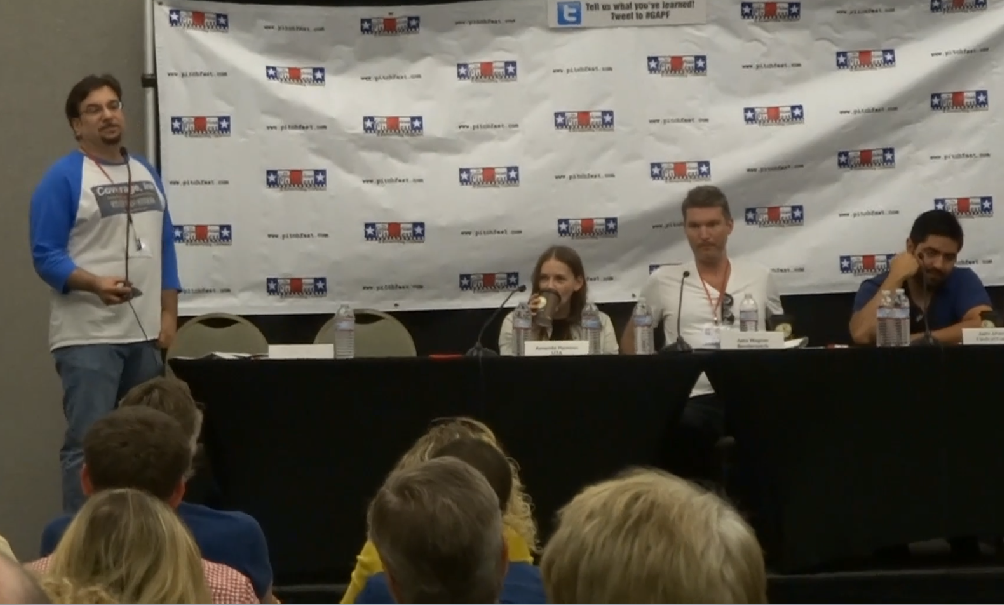
Agent's Hot Sheet - Live! returned today to Great American Pitchfest. I had the enormous privilege of moderating a panel of literary representatives and asking them a ton of questions of interest to screenwriters. The panel featured Amanda Hymson, feature lit agent at United Talent Agency, Jake Wagner, head of lit at Benderspink, feature lit manager Jairo Alvarado from Circle of Confusion, and Chris Mills from Magnet Management's television department. The rollicking 90-minute discussion dug into what they're looking for and how to get their attention, as well as strategies to pump up your writing and precisely target the marketplace. Video to come soon!

We had a great time meeting so many of you guys today at Great American Pitchfest. We heard lots of compelling stories and saw the fire in your eyes. So for everyone pitching at the event, best of luck, and do let us know how you do. A gajillion thanks to Bob Schultz and Signe Olynyk for putting on the premier screenwriting event. For more details please visit www.pitchfest.com.

Sunday, June 15, 2014

"1969" Reading Wows at LA Film Festival

Stephany Folsom and Clark Gregg
Tonight we had the pleasure to attend the Black List Live! staged reading of 1969: A Space Odyssey, or How Kubrick Learned to Stop Worrying and Land on the Moon. Writer Stephany Folsom's crack screenplay was brought to life by folks like Clark Gregg (Agents of SHIELD,) Jared Harris (Mad Men,) Kathryn Hahn (Crossing Jordan) and Lance Reddick (Fringe.) A packed house at the historic Los Angeles Theatre delighted to a stage full of insanely great talent and a good story compellingly told.

The script details how the US Government recruited Stanley Kubrick to fake the moon landing when it appeared the real thing might not be feasible. The conspiracy theory  behind the story has been around since the '70s, and Kubrick himself liked to tease the audience by planting Apollo 11 clues in his films. Folsom's script takes that ball and runs with it, throwing difficult Kubrick into an almost buddy-movie situation with feisty government agent named Barbara Penn. The yarn is clever and seems to get Kubrick right.

1969 made the Black List last year and launched Folsom in a big way. She recently landed a deal to adapt Harlan Coben's best-seller "Missing You" for Brett Ratner and Ratpac Entertainment. Given the big industry crowd tonight, can a movie be far behind? perhaps not, as Kurtzman + Orci are attached as producers. A big win for Folsom and screenwriters everywhere.

http://www.coverageink.com

Tuesday, June 10, 2014

AGENT'S HOT SHEET - The New Paradigm Pt 2


Are TV specs are the new feature specs? More than ever, baby writers need to be all things to all people. Our panel of top Hollywood reps shows you how.

by Jim Cirile

Panelists

ADAM PERRY, APA

RICHARD ARLOOK, THE ARLOOK GROUP

JAKE WAGNER, BENDERSPINK


Hollywood is making less fricking movies than ever. This creates a ripple effect affecting pretty much everything -- less scripts being sold means less opportunities to break in, which even means less interest on the part of agents, managers and development executives for reading spec material, and on and on. Ugh. Taking up the slack has been TV, which has been boomtown lately. As a result, some reps like Jake Wagner from Benderspink, long-known for setting up feature specs, have shifted focus towards TV (hence the whole ”paradigm shift” thing. With me? Good.) 
Richard Arlook, Arlook Group

Can a writer still break in with “just” a killer feature spec? “We target clients that can do more than one thing,” says APA feature lit agent Adam Perry. "Obviously, I hear legends of the days 10 or 15 years ago where you’d go out with a (feature), and almost every other spec sold for a high price. Now it’s more that the people we target, A, we think they can play in the studio feature game, and B, they can be attractive to the TV market as well.” Jake Wagner says he still encourages his clients to write spec features. “Hopefully, we’ll sell it, but if we don’t, hopefully it serves as a sample to break them into TV. I’m finding a lot of new people I’m signing are off of original spec pilots. For original ideas, (the place to go is) TV.” Arlook Group’s Richard Arlook puts it like this: “If you’re a typical motion picture lit agent, who used to rely on selling specs, you have no choice but to seek alternative revenue streams. If you’re still in this business 5 or 10 years later, the only way you’re surviving is because you’ve become entrepreneurial within that agency. You’ve learned to pursue reality stuff, television, packaging, all of those things any smart representative would be doing.” 

Says Perry, “I’m on the feature side, so obviously (a writer has) to have a good feature or I’m not really interested. But we really beat home in the meetings, and when we’re putting a team together to go sign someone, that we hope you have TV aspirations.” And if you don’t, he says, well, buccaneers, you’d best start. “There are lots of networks now, and all these new places popping up – Crackle, Hulu, Yahoo!, all these new channels – are looking for studio writers or just big feature writers in general. They (often) have big show ideas that we can develop and sell to a network or to one of the cool cable channels. At least at our agency, it’s very important that the feature agents are always talking to the TV agents and vice-versa. So without saying it’s essential, it’s definitely more than 50/50 – I’d say 80/20 – that we want people who can do both.” 

So this means you should probably have a good feature sample AND a good TV pilot sample before you go rep hunting. Aw, come on, it’s not so bad. 1-hour TV pilot scripts are half the length of features. Piece of cake. Well, except for plotting out the full multi-season arc and all the character bios and show bible and so forth… hrm. Damn. 

Well, if you’re just not feeling the TV side, fear not. There are other paths yet. Says Perry, “The one good thing about the studios making less movies is that there are more non-studio financiers popping up. There are new opportunities every day for writers to set up some projects. Some of these places will make the projects that the studios won’t make any more.” Indeed, earlier this year, Perry set up Alexis Jolly's A Beautiful Day in the Neighborhood, the Mr. Rogers biopic, at Treehouse Pictures. “That movie has no place in the studio system,” says Perry. “But for $10 million with the right actor and right director, they can get hopefully good domestic results out of the Fred Rogers story.” Adds Arlook, “There’s always a new kid in town. Somebody comes in with a development fund and 5,000 agents descend upon them. Maybe you get lucky, maybe you don’t. They’re not necessarily gonna pay you a big quote anyways. But maybe it can keep things going or open a door.” 

And on the feature side, don’t underestimate the power of the Black List. Even if a script doesn’t sell, getting on there can launch or revive a career. Says Arlook, “I represent (a writer) who’s been around forever, 30 years or so. He’s had some success, some not-so-success, but he’s always kind of made a living.” Eight years ago that writer’s studio movie opened but underperformed. Soon he was forced to take jobs well below his quote just to keep the lights on. “Finally he got an opportunity based on his (studio) script two years ago to do a discretionary fund project,” says Arlook, “and literally got paid (half his quote) to write the script. He took it because he liked it and thought he could do a good job. Well, he wrote a great, great script. It ended up on the Black List. (An A-list actor) loved it and committed to it, and now it’s getting made and he’s getting big assignment work at the studios again and making well beyond what his quote was at the time. What I’m saying is you can turn around. I still believe that if you’re in Peoria right now or wherever you are and you write that brilliant script… the cream always rises.” 


The key, says Perry, is “write something that is unique. Then (when you) give it to someone, the topic’s going to be so cool and so interesting that they’re going to want to pass it to their friends. And amongst those Hollywood execs, it goes viral. That’s how you land on the Black List. That’s how you sneak a sale in there early. So write about something one, that you’re passionate about, and two, that you think has the possibility to raise a lot of eyebrows. Whether it be someone’s biopic that people are fascinated with like Rodham, from last year -- for a young writer to tell a true story and tell it in a unique way, I think it opens a lot of eyes. And by the way, the Rodham script (by Young Il Kim) was discovered by our own Richard Arlook. “That was off a query letter,” Arlook marvels. “That was a one in a million, but it was a query letter. There was something in that query that struck my fancy. I forwarded it to (Jason Hong) and I said, “This sounds interesting. Read it. And he read it and he said this is really good. So I read it and I said, ‘Shit, it is really good.’ Look where that guy is.” Rodham is currently fast-tracked with James Ponsoldt (The Spectacular Now) attached to direct. 

So whether you’re working on a TV pilot or a feature spec, remember to bring the uniqueness, bring the voice. It has to be different enough to stand out from the pack. Competency is no longer good enough. Safeties off, boys and girls! Go get ‘em. 

+++

Jim Cirile is a writer/producer living in Los Angeles and the owner of leading discount screenplay analysis/development service coverageink.com as well as Coverage Ink Films. His latest movie is the animated horror feature Malevolent. His previous AHS columns written over the course of a decade for Creative Screenwriting magazine are available as an e-book: Agent’s Hot Sheet – Ten Years of Screenwriting Wisdom from Hollywood’s Top Reps.


www.coverageink.com
 

Wednesday, June 04, 2014

Coverage Ink June 2014 Newsletter - Agents Hot Sheet Live! and More


1) D-I-Y Is Not a 4-Letter Word 
2) Agent’s Hot Sheet – Live! At Great American Pitchfest 
3) Black List Writer Stephany Folsom's Staged Reading - Starring Clark Gregg 

+++

1) D-I-Y is Not a 4-Letter Word 

Hi friends!

I used to be all about spec scripts. I’d bang out two a year like clockwork – well, a semi-broken clock that is perpetually late – to varying levels of success. Sometimes I’d make a little headway, make some money. More often than not, however, those projects would soon join their brethren on the “Material to be revisited” shelf (which is now more like a big stack of musty, dusty boxes in the garage.)

Strangely, after about 15 years, that kinda started to get old. I mean, I’m stilling pulling boots out of my butt from the previous failed attempt... and I’m somehow supposed to do this again? Urgh.

http://www.amazon.com/Showdown-Godz-CoverageInk-Films/dp/B00FL977F6/ref=sr_1_1?ie=UTF8&qid=1401928524&sr=8-1&keywords=showdown+of+the+godzEnter HD camera, editing software, and the promise of being able to make movies on the cheap. Oooh… enticing.

Thus about 6 years ago I coalesced some NYC indie filmmaking community friends, including the talented writer Aaron Schnore and well-known Brooklyn Halloween Show producer Robert Troch, to make Coverage Ink Films’ first movie “Showdown of the Godz.” SHOWDOWN is a fun little cautionary tale which shows what obsessive devotion to Godzilla can do to a marriage and a career.

Boy, did we get our asses handed to us.

Perhaps I should have also credited Mr. Murphy and his infamous law, because he was in full force on that particular show. Everything that could go wrong and all that -- from a DP who didn’t know how to operate the camera (or clean the lens,) to abominable sound, to a checked-out art and costume department, to an inept still photographer and practical FX team, to an editor who held our negative hostage… and oh, so much more. This necessitated thousands of dollars in painting out dust specks, rotoscoping, and CG repair work.

www.liberatormovie.comThe final result came out flawed but pretty cute. It stars George Takei and you can watch it on Amazon and Indieflix. But oy, YEARS of hassle – for a 12-minute movie. And when was all over, what did I do? The whole damn thing all over again! Because even though I threw away a lot of money and everything went wrong, it was still a more rewarding experience than writing a spec that goes nowhere.

Thus, armed with the multitudinous lessons gleaned from “Showdown,” we set out on our next cinematic adventure – an 18-minute short film/pilot, LIBERATOR, starring Lou Ferrigno as a disgraced, washed-up ex-superhero, along with a panoply of genre stars like Peta Wilson, Michael Dorn and Ed Asner. Yep, Mr. Murphy raised his ugly mug again, but this time we were better able to keep him at bay. LIBERATOR, partly crowdfunded, cost about as much as a really nice new car, went on to win a plethora of awards, and just last week it was released on iTunes and Amazon.

So now Coverage Ink is not just a coverage company. We are a full-fledged prodco (see www.coverageinkfilms.com.) We are currently shooting our first feature MALEVOLENT, an animated sci-fi/horror film starring Ray Wise ("Twin Peaks,") Bill Moseley ("The Devil’s Rejects") and a third star we cannot disclose yet (but chances are you have a huge crush on her). This time out we have a slick, professional team and everything is ridiculously organized and on schedule. And we’re still keeping the costs super-indie-low. Lessons learned.

More satisfying than racking up passes on a spec? Absolutely frigging correct.

www.facebook.com/malevolentmovie
Now look, this is not to say we’re not ALSO still writing specs. Everyone at Coverage Ink is doing exactly that. But most of us are also shooting stuff now, too. And that is a beautiful thing. Because, folks, why should you let other people have the power over whether or not you get produced? You just need three things – Drive, the Right People, and a little bit of Dough. Drive – nothing is going to happen unless YOU will it into existence. If you have a compelling script (that you’ve taken the time and effort to make great,) and you say, “I am shooting this,” then people will come aboard your bandwagon. Enthusiasm and vision are infectious. Right People – clearly, this is probably the trickiest bit. Work with close, reliable friends and only use Craigslist when absolutely necessary. Over time you will build up a list of people to work with (and ones you will never hire again.) Dough? Hell, you can shoot something on your iPhone for free. If you want to step it up, you can buy an HD camera for $250 and a basic lighting kit for $150. (Try not to skimp on sound though – in-camera sound sucks.) Crowdfunding is harder than ever nowadays, but is still possible especially if you attach a genre star (who may be surprisingly affordable.) And don’t overlook Bank of Dad and Film Financing By Mastercard.

The time is now. Take back the power, my friends! Make something. If it doesn’t turn out great, chalk it up to learning the ropes and go make something else. To quote a certain chrome-dome starship captain, “Make it so.” And let me know how it goes.

Jim Cirile
www.coverageink.com

P.S. Please “like” MALEVOLENT at www.facebook.com/malevolentmovie

+++

2) Agent’s Hot Sheet – Live! at Great American Pitchfest

www.pitchfest.com
Once again we are returning to Great American Pitchfest for another Agent’s Hot Sheet – Live! panel. As many of you know, I wrote the Agent’s Hot Sheet column for “Creative Screenwriting” for a decade, which was well-known for its incisive advice from the industry’s top reps on how to break in and stay in, what to write, and how to avoid the myriad landmines on the way.

Last year's panel packed the room at Great American Pitchfest and was a huge hit. This year we will again be interviewing five top industry reps in a rollicking, fun and no-punches-pulled 90-minute panel. This event will sell out, so register now! Use this and get 10% off: JCGAPF11.
Then stop by the Coverage Ink booth after and say hello. Great American Pitchfest is an amazing resource - a whole room full of people who might potentially launch your career. You just have to blow them away. If any of you need help bulletproofing your scripts, of course we are here to help.

Great American Pitchfest: 6/21 and 22, Burbank Marriott Hotel. Agent’s Hot Sheet panel: 3-4:30 PM Saturday 6/21. Visit www.pitchfest.com to register and for more info. See you then!

 +++

3) Black List Writer Stephany Folsom's Staged Reading - Starring Clark Gregg 
https://1969aspaceodyssey.eventbrite.com/
Stephany Folsom’s script “1969: A Space Odyssey,” about the US government enlisting visionary director Stanley Kubrick to fake the Apollo 11 moon landing, lit up the Black List last year, and her career has been white-hot ever since. If you haven’t read our interview with this amazing lady, check it out right here.

For those that haven’t had the pleasure of reading Stephany’s unusually great script, well, how would you like to see it performed live on stage starring Clark Gregg (“Agents of SHIELD”)? The script will be performed in a staged reading at the LA Film Festival on Saturday 6/14. Get your tix now.

+++


Sunday, May 18, 2014

KUBRICK AND MORTAR


By Jim Cirile

Stephany Folsom is on a roll. First came the incredible 2013 Black List success of her script 1969 A SPACE ODYSSEY or: HOW KUBRICK LEARNED TO STOP WORRYING AND LAND ON THE MOON, a brilliantly oddball buddy dramedy (in which one of the buddies was a wonderfully difficult Stanley Kubrick.) That script propelled her into orbit; recently it was announced that Folsom has been hired by Warner Bros. to adapt the Harlan Coben crime novel “Missing You.” Scott Sheckman from Kubrickian.org and I chatted with Ms. Folsom about what is was like trying to channel Kubrick, duping the American people en masse, and how it feels to be in the “Black.”

+++

Jim and Scott: When did the screenwriting bug bite you, Stephany?

Stephany Folsom: I grew up in Colorado Springs. From a young age, I knew I wanted to be a writer, and I started writing as soon as I could learn how. As there wasn’t much to do in my hometown, I’d frequently visit the local movie theaters or DVD rental store, watching new and old movies as much as possible, studying the various crafts, genres and history. It’s my natural tendency to write movies, and I ended up going to film school because of that. My (high school) guidance counselor didn’t know what (screenwriting) was and suggested I go into the radio industry. I didn’t think that was very practical, so I came (to Los Angeles) and went to Loyola Marymount University. In their film school you got the opportunity to produce, direct and write screenplays and learned how to make a film from the inception, all of it. I considered that an invaluable education.

Stephany Folsom
J + S: Well, never underestimate an exciting potential future in terrestrial radio. What did you do after film school?

SF: After graduating Loyola, I found work in Hollywood’s development trenches, writing script coverage and notes. It was beneficial industry experience, but I felt like I could not write for myself while working full-time in development. So I left LA to assist a friend shooting a film in India, and then found myself working for a foundation that required a lot of travel shooting documentaries on important topics such as human trafficking and AIDS. In my opinion, traveling is the best thing a young screenwriter can do for their career – meeting and talking with diverse individuals with fascinating stories. That experience really shaped me as a screenwriter and helped me to approach the industry when I returned. I wound up writing some TV as well as writing on the YouTube series “Ds2dio 360,” while still writing feature specs.

J + S: One would guess that you found a certain legendary director influential as well?

SF: I saw all of Kubrick’s films from “Paths of Glory” all the way up, everything he’d done. He was my favorite filmmaker. But “Dr. Strangelove” was my gateway drug. I saw it in high school, and I was like, oh, my God! Who is the man who made this crazy film? That led me down the rabbit hole of discovering all of Kubrick’s cinema. I have to say, I wasn’t a big “2001” fan until I saw it on the big screen. Once you have that imagery before you, and you’re surrounded by that soundtrack, it just has a completely different impact. It made me realize how ingenious that movie is, because it was created for that specific venue perfectly.

J + S: “1969: A Space Odyssey” presents a crazy-cool scenario – that the US government enlisted Stanley Kubrick to fake the moon landing as a back-up plan in case NASA couldn’t pull it off. The scenario seems outlandish and yet possible at the same time, given all the conspiracy theories that turned out to be true (like the Gulf of Tonkin incident, MK Ultra and Operation Northwoods, etc.) Kubrick himself fanned the flames of his involvement in oblique ways, such as the boy wearing an Apollo 11 sweater in “The Shining.” Do you think there’s any truth to any of it?

Was Kubrick just messing with us?

SF: The rumors that he faked the moon landing started right after it happened, but it’s gotten recent attention with that cool documentary “Room 237.” There’s a French mockumentary titled “Dark Side of the Moon” featuring some very important people including Rumsfeld, Kissinger, and Kubrick’s wife Christiane who suggests in a tongue-and-cheek way that Kubrick played a role in staging the landing footage and “Room 237” explores the possible hidden messages in Kubrick’s adaptation of “The Shining,” which some feel was Kubrick’s way of confessing his involvement with the landing via numerous cinematic clues. I kind of got the impression from all that that it was a running joke with Kubrick, “Oh yeah, I faked the moon landing.” He had kind of a messed-up sense of humor, from what I can gather. I wouldn’t be surprised if he layered stuff into his later films as a wink and a nod. I just thought that it would be a fun thing to write, something I cared about, and then (I’d write) something else to pay the bills.

J + S:  Another interesting coinky-dink, Peter Hyams, the director of "2010", was also the director of the hit 1977 government-conspiracy thriller "Capricorn One", about the faking of a manned Mars landing sometime in near future. Hyams and Kubrick were reportedly friends, and Kubrick blessed Hyam's helming "2010" as a highly anticipated sequel to his iconic "2001"  Another interesting thing I stumbled across was a recent account from a sound man who worked closely with Kubirck for almost 30 years. As the story goes, shortly before Apollo 14 was to take off from the Moon, Kubrick suggested they go watch TV together, adding a strange remark:  “Let’s see if they got it right".

SF: There’s actually a line like that in the script, where Kubrick is watching the actual moon landing at the end and says something to the effect of, “It’s not going to look as good as mine.” 


J + S: Was it a daunting task, trying to capture a legendary director so fresh in our minds?

SF: Kubrick was such an exceptional talent; I wanted to enhance that, and I also wanted to make him human. I immersed myself in everything I could find out about him, every piece of film footage I could find and read and watched all the interviews, not just what Kubrick said about himself but others who had their own personal stories about him. This helped me understand him as a fleshed-out being, honoring him but making him relatable. I listened to his audio interviews non-stop so I could get a cadence of his voice and how he phrased things; I tried to be truthful of that and honor who he was, nail down his mannerisms… I was kind of stalking him (laughs).

J + S: And well done. You found that delicate balance that made Kubrick work. It would be easy to just caricature him. Pairing him with a sharp foil in Barbara, the operative sent to keep him on the rails, was also a smart move, as she becomes the voice of reason/audience surrogate.

SF: Thank you so much. I created the character of Barbara because I felt like it was too big of a risk to put the whole story on Kubrick’s shoulders, and also it would kind of take away some of his mystique as well. I needed a character for him to play off. And I also thought it would dishonor the moon landing, which I think is one of the greatest accomplishments we’ve done as a country if I put a real character against Kubrick. So I created Barbara as a composite of several women who were in the Nixon task force on women’s rights. It’s kind of sad – they were actually in high-powered positions in other jobs, but they wanted to become the first women with White House jobs. So they took positions as assistants and things like that, even though they were overqualified. To create the most conflict and obstacles in the story, I wanted to put him against a character who was the polar opposite of who he was. And the greatest opposition for Kubrick and the hardest for him to understand would be a woman, and not only a woman, but a woman who is really perky, outspoken and happy.
  
J + S: So tell us about whole Black List experience.

SF: Because it’s a quirky script, my reps (Kaplan/Perrone Entertainment) went to a very select group of notable Hollywood tastemakers first. After that, it seemed to spread like wildfire and take on a life of its own. People I met for the first time at a cocktail party said they read my script, which was a bit new and bizarre to me! I was superstitious and don’t believe all the rumors and talk about it, but didn’t believe it until the day of the actual announcement that it was going to (make the Black List.).

Once it hit The Black List, I felt like I was suddenly on a list for high-profile assignments. It does give you a stamp of approval. There’s so much material out there, and people are so strapped for time. So anything to move you to the top of the stack is a great thing. I’m very thankful. It gives you a sense of approval, and anything that can put you at the top of the stack of material, like winning contests or making the Black List, really helps.

J + S: Another thing the script does well: pacing. It’s lean and mean. What’s your process?

SF: I’m a big believer of free-form visual medium, but I also feel you have to be structured and organized with an outline. It’s a bit of a math equation, in that if something on a page feels wrong, you have to be obsessed with the structure and the timing and then you can play with the characters and dialogue. If it isn’t plotted out, then it doesn’t work as a movie, something that at the end of the day you can watch on the screen, which is of course the point. I feel like sometimes people forget that equation.

J + S: The Coben book has a strong female protagonist, so “1969” must have been the perfect writing sample. So congrats on that. 

SF: Kurtzman & Orci have come on to produce “1969,” which I’m very excited about – they’re very writer-friendly and they’re just cool people, so that helps. And so that’s going forward. There’s lots of stuff happening now, and it’s all good.

J + S: Besides all the wonderful and wacky stuff we’re talking about in regards to the premise of your script, what do you think are Kubrick’s significant and signature contributions to the art of cinema and the industry?

SF: Kubrick was one of the first artists to work independent of the studio system and inspired many to follow in his vanguard footsteps. On the artistic side, he was one of the few filmmakers to advance the visual language and vocabulary of cinema. Like Orson Welles and Hitchcock before him, Kubrick provided other filmmakers new ways to tell stories without spoken or written words. What he could visually tell you with one frame of film was astounding. Similarly, with an actor’s look and the music. We take it for granted that what we see today is the language of cinema, but Kubrick had a strong hand in creating the contemporary language. He should be honored as one of the forefathers of cinema.

J + S: You wrote a great script that honors Kubrick and delivers a great read, too. Obviously your story will motivate writers – any advice?

SF: Thank you! “I hope it brings people together who love Kubrick so we can talk about and celebrate his films – that’s the place I was coming from in writing the script - as a Kubrick fan. As for the Black List, I would never delve into writing a script with the specific goal of making it on the Black List. It’s a superficial goal. It may take three months, six months, a year. To invest that kind of time in it. You’ve got to care what you’re writing about and what you’re saying. The whole point of story is to make sense of our world and so that we can communicate with each other. So what’s the best, most exciting story that you care about, that has something to say, that is important? Because you’re going to have to fight for it, put time into it, sacrifice for it – so it better be something that you care about and that you think is important. Lists are wonderful. Contests are wonderful. But that is out of your control. What you can control is what you’re saying and what your story is about and how invested you are in it.

www.coverageink.com

Wednesday, May 07, 2014

CS Open Veterans Rip Up Universal Pix Fellowship

Universal Pictures 2014 Fellow Chandus Jackson
Not long ago we used to host an annual shindig called the CS Open at the Creative Screenwriting Expo. This was to my knowledge the only live writing tournament ever. We gave out tens of thousands in prize money over 7 years and had a TON of fun. And two intrepid, never-say-die writers who kept coming back again and again for more punishment were finalists Chandus Jackson and Julie Anne Wight.

So we're pleased as freakin' punch to note that Chandus has been selected as one of five Fellows by the Universal Pictures Fellowship for 2014. Chandus has been laboring in the trenches and working his butt off for years, so this victory is a sweet one indeed. Equally gratifying: Julie Anne Wight was named as a finalist. We were able to clearly see the dedication they both have to their craft in round after round of the CS Open, where they generated new scenes on the fly based on our outlandishly twisted prompts. Both rose to the occasion and shone. 

More and more this year, we are seeing examples that disprove it's all about "Who Ya Know." Sometimes, it really is about hard work. The cream, as they say, rises.

Congrats to them both. We're expecting great things! (Hey, no pressure.)

--Jim C.


Wednesday, April 23, 2014

WRITERS ON THE STORM WINNERS SELL A SPEC!

Elms & Sanders
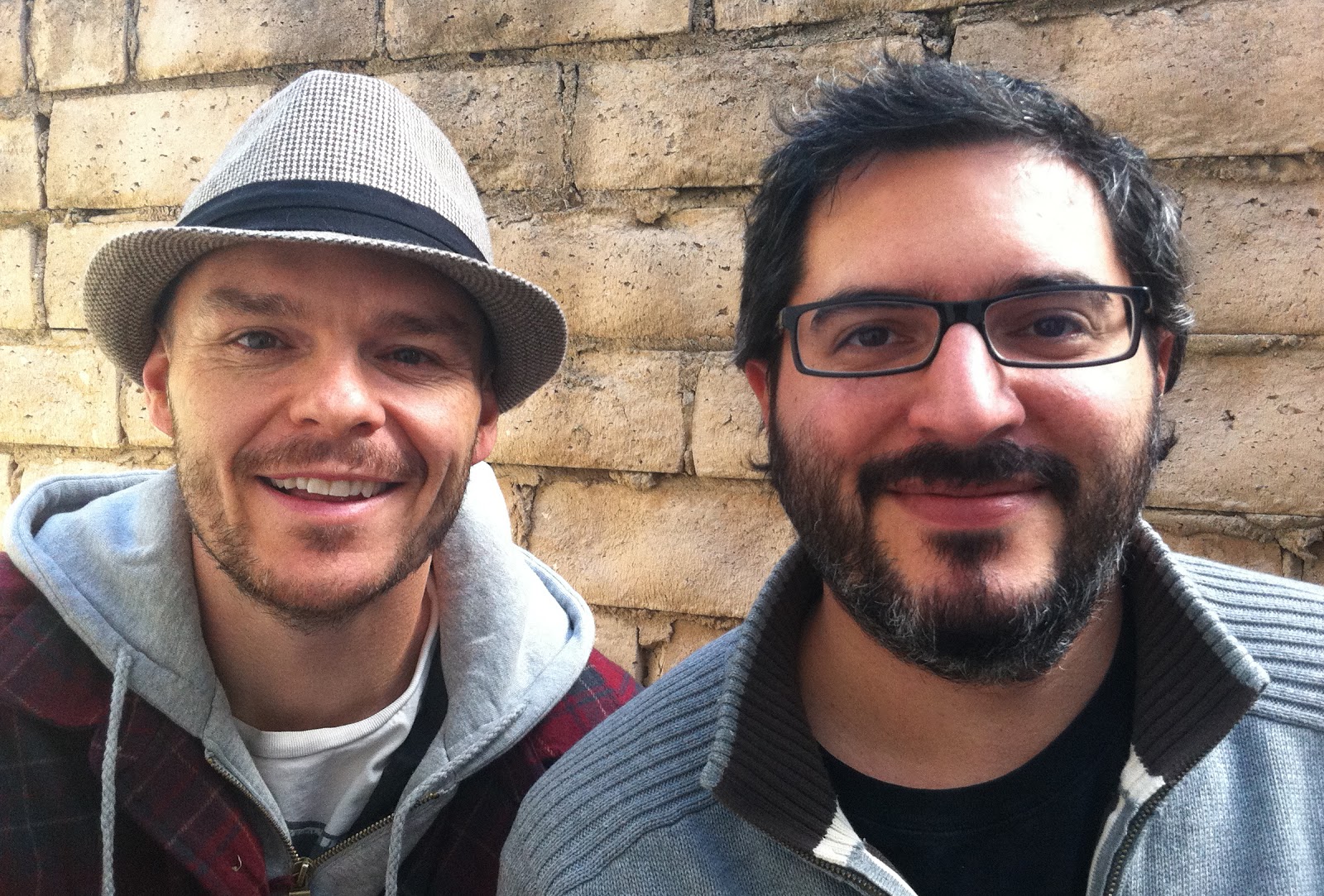
We couldn't be prouder of Brooks Elms and Glenn Sanders. We knew these guys had the goods when we read their uproarious "Wright Or Wrong," a revisionist comedic take on the Wright Bros. After they won our 2012 Writers on the Storm, we got them into UTA, where they were signed by Emerson Davis. But that was just the beginning.

Things heated up for them pretty quick, and Elms and Sanders were soon meeting with big league movers and shakers. Interestingly, while they continued to develop comedies, it was their sci-fi/action thriller scripts that seemed to get the most play. 

Now they've hit paydirt with their sale of SNOWFALL to Gold Circle Films. The script centers on a group of Chicago residents trapped on the El in a blizzard who discover that the storm is really cover for an alien invasion. Check out the promo reel right here:

https://www.youtube.com/watch?v=JWknT8FwmE8

FYI, writers and producers will offer make a promo reel or test reel to help buyers visualize the movie. It's a very useful tool when trying to sell a project. So a big round of applause to Brooks and Glenn, two great guys who deserve it. And if anybody tells you contests can't do jack for ya... ahem.

http://www.coverageink.com